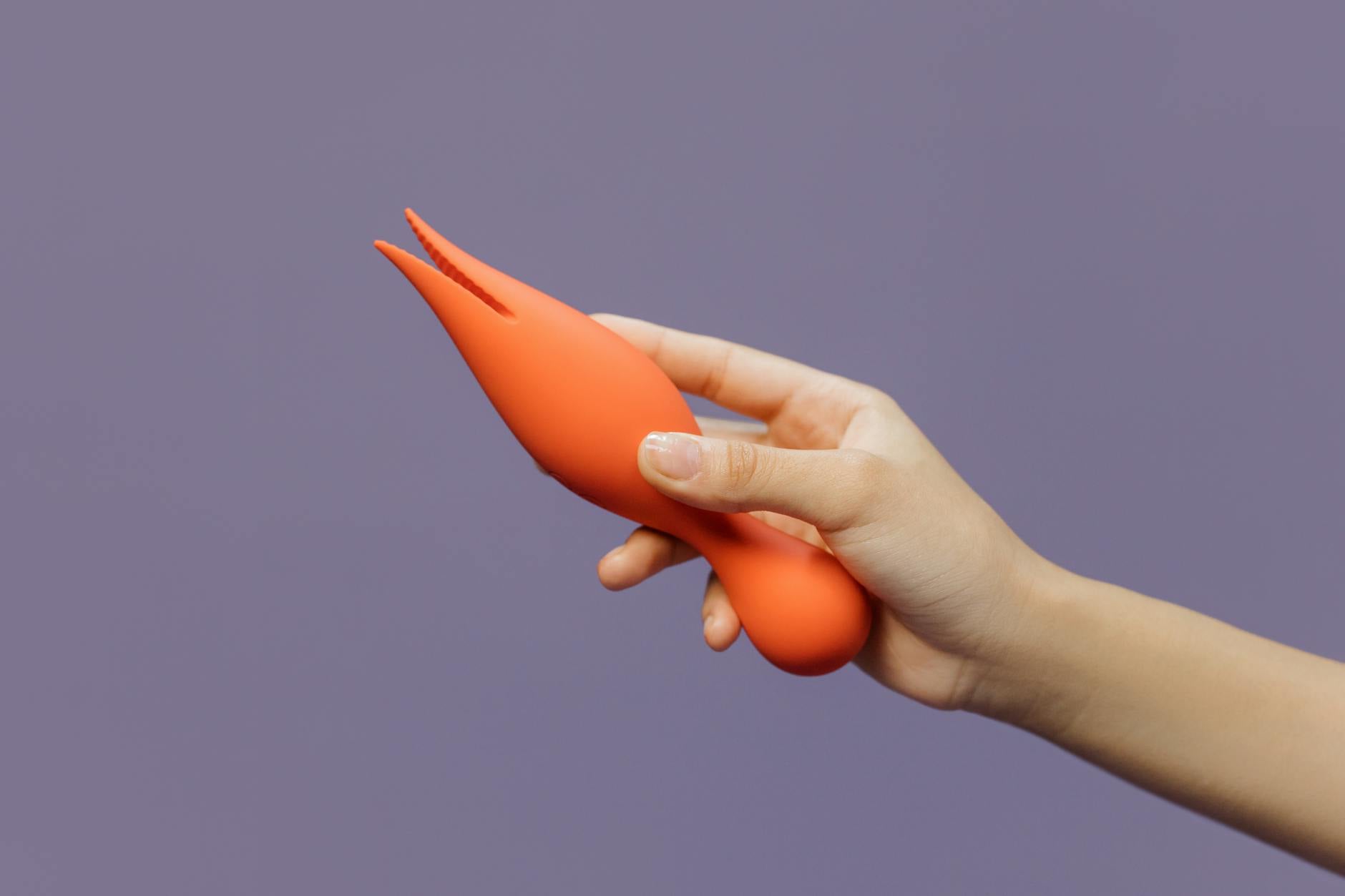
The distance problem nobody talks about
Long distance relationships end for a lot of reasons, but one of them is almost never said aloud: the gradual erosion of physical intimacy. You can video call. You can talk for hours. You can build emotional closeness that rivals people living together. But you cannot touch. And after months or years, that absence starts to reshape what your relationship feels like.
There's a particular kind of disconnection that happens when your body becomes a private thing again. You lose the casual affection. The eye contact during sex. The ability to be vulnerable in the way physical intimacy demands. Many couples in long distance situations either shut that part down completely, or they try to white-knuckle it through occasional visits, which can actually make the gap feel wider.
Here's what I've seen work: building a deliberate sexual practice that doesn't try to replicate in-person sex, but instead creates its own intimacy. And a lot of the time, that practice centers on something like a lemon vibrator, used alone or shared in real time across distance.
Why lemon vibrators work better for long distance intimacy
There are a few mechanical reasons why suction toys fit long distance better than other options.
First, they're less dependent on a partner's rhythm or presence. Vibrators that require grinding or specific angles feel like they're asking your body to perform someone else's motion. A lemon vibrator, by contrast, does its own work. You're not trying to adjust to someone else's pace or fantasy. You're building your own pleasure on your own terms, which actually creates deeper orgasms and more reliable arousal. This matters tremendously when you're alone and potentially on video with your partner, where physical insecurity can shut things down fast.
Second, suction creates a different quality of sensation. It's wider, more diffuse, less intense in any one spot. That matters because intensity without emotional safety can feel isolating. With a lemon clitoral vibrator, the sensation pulls upward rather than pressing down. People often describe it as feeling less clinical and more alive.
Third, they're quiet and quick to clean, which removes friction from the logistics. Long distance sex often happens late at night or during a call that's already scheduled for something else. You don't want to spend 10 minutes finding things or setting up. A lemon vibrator sits out on a nightstand. You pick it up. You go.
Building the ritual: solo practice between visits
One of the most important things I recommend to long distance couples is what I call "solo anchor practice." It's time alone with your own pleasure, ideally on a rough schedule.
This isn't about replacing partner sex. It's about maintaining connection to your own body. When you're in a long distance relationship, you can start to feel like pleasure only exists when your partner is present. That trains your nervous system to shut down alone. It makes you dependent. And it actually makes visits feel more pressured, because you're dumping months of unmet desire into a few days.
Instead, build a weekly practice alone with a lemon vibrator. Maybe it's Sunday mornings. Maybe it's twice a week. The consistency matters more than the frequency. Use this time to learn what patterns feel good, what kind of breathing helps you relax, what gets you there fastest and what gets you there deepest. Pay attention. Write it down if you want.
Then share those discoveries with your partner. Not during sex. In conversation. "I found out I come harder if I do three rounds of the second setting and breathe out on release." That kind of detail. You're giving them information. You're also saying: I've been thinking about this. About us. About pleasure. That's a particular kind of intimacy.
Real time connection on video calls
Much of the anxiety around long distance intimacy comes from the awkwardness of it. You're on video. You're aware of how you look. The angle is weird. The lighting is bad. You're self conscious.
One way to shift this: agree in advance that you're doing this. Schedule it like you'd schedule anything else. Not to make it feel robotic, but to give yourselves permission to clear space and not be interrupted. Silence your phone. Close other tabs. Do the practical work so you can actually relax.
Then, here's what changes with a lemon vibrator versus other toys: the focus can be wider. You're not performing a specific act. You're not trying to choreograph something. You can just be present in your body while your partner watches. They can talk to you. You can take breaks. You can laugh. It feels less like a performance and more like he or she or they is invited into your pleasure, which is different from the pressure to demonstrate pleasure.
Many couples also discover that they prefer not to orgasm on these calls. They'll use the time to build arousal, to feel close, to get their body engaged. Then they finish alone later, once they're off the call. That breaks the spell less. And it gives them something to text about after: "I finished thinking about that." That small communication loop, repeated over months, actually builds more sustained intimacy than one big climax does.
When partners are using toys together from different locations
Some couples take this further. They'll both have a lemon vibrator, or compatible toys, and use them together on a video call. I want to be clear about what works and what doesn't here.
What doesn't work: trying to sync orgasms, matching intensity, or pretending this is the same as in-person sex. Your bodies have different rhythms. Pressure to align them kills arousal instantly.
What works: talking about sensation. Describing what you're feeling. Asking questions. "What does that feel like?" "Tell me what you want me to do." The pleasure becomes secondary to the communication. And that's actually the point.
For logistical reasons, some long distance couples build what I call a "shared evening." They both start their practice at the same time. They might be on call with video on, or they might just be texting. They each use their own toy, their own pace, their own rhythm. But they're together. They're aware of the other person. And that turns what could feel like a lonely, private act into something connective.
What changes when you visit in person
One thing I always tell couples: if you build this practice separately, your in-person time doesn't have to be all about sex. And that's actually the gift of the practice.
When you see each other, you're already plugged in to your own pleasure. You're not arriving starved. You have context. You know what feels good. You can ask for it. In-person sex in long distance relationships often fails because couples treat it like a pressure cooker, like all the months have to be reclaimed in 72 hours. Instead, if you've been maintaining your own practice, you can just enjoy being together. You can have mediocre sex some days. You can take time. You can explore something new. You can have long conversations in bed without needing them to lead anywhere.
This is one of the most underrated shifts I see in couples who stick with long distance. They stop treating sex as the litmus test for whether the relationship is working. And that actually makes it better.
Talking about this with your partner
If you're thinking about introducing a lemon vibrator into your long distance practice and you're nervous about how your partner will receive it, here's how I'd open it.
Not: "I want to masturbate on video with you."
Instead: "I've been thinking about how to stay connected while we're apart. I know we can't be physical together right now, but I want to rebuild the sexual part of us. And I think there might be a way to do that that doesn't feel fake or pressured. I'm curious what you think."
Then share the specific idea. If your partner is immediately resistant, that's information worth paying attention to. Not a dealbreaker necessarily, but something to talk about. What makes them uncomfortable? Is it jealousy? Shame? Logistical anxiety? Each of those has a different solution.
Many partners are relieved to hear this. Long distance is lonely. It's isolating. When you name the problem and propose something specific, you're not asking them to feel better. You're asking them to participate in a solution.
The research backs this up
Long distance couples who maintain sexual connection during separation report higher relationship satisfaction and lower breakup rates than those who don't. The mechanism isn't magic. It's that sexual connection is one of the ways we know we're still wanted. When that disappears, we start to wonder if the relationship is sustainable. When it persists, even in awkward or imperfect ways, we know we're still chosen.
A practice with a lemon vibrator isn't a substitute for being together. But it's also not a consolation prize. It's its own thing. It's a way to say: I'm thinking about us. I'm willing to be vulnerable alone. I'm building something with you even though you're not physically here. That's what sustains long distance relationships.
FAQ: Long distance intimacy and lemon vibrators
How often should we do this if we're long distance?
There's no magic number, but consistency matters more than frequency. Once or twice a week for both people, on a loose schedule, is more sustaining than sporadic attempts. You're building a practice, not hitting a target. If you both know it's happening Tuesday nights, you can anticipate it. You can prepare mentally. Your nervous system can settle into it. That's worth more than random bursts of intensity.
What if my partner is uncomfortable with me using a toy alone?
That discomfort usually comes from one of three places: shame about sex, jealousy, or a belief that your pleasure should only happen with them. Each needs to be addressed differently. If it's shame, education helps. If it's jealousy, reassurance helps. If it's the belief that your pleasure is "theirs," that's a deeper conversation about autonomy and control that might benefit from a couples therapist. Your body belongs to you. That doesn't threaten a healthy relationship. It stabilizes it.
Can a lemon vibrator help rebuild connection after months of no sexual contact?
Yes, but it works best if you go slowly. Start solo. Build comfort in your own body first. Then, once you feel grounded, introduce the idea of sharing it. Jumping straight to video sex after months of nothing can feel too intense and can actually push you further apart. The slow rebuild is what works.
Is using a toy alone considered "cheating" in a long distance relationship?
Not in any healthy framework. Cheating involves deception and betrayal of agreed-upon boundaries. If you and your partner have talked about this and agreed that solo practice is part of staying connected, it's not cheating. It's the opposite. It's intentional. It's transparent. If you haven't talked about it, then have the conversation. Don't assume anything.
How do I get my partner to be more interested in this if they're not naturally enthusiastic?
Don't push. Interest comes from safety and clarity. Start by making sure they understand why this matters to you. Not because you're starving for sex, but because you want to stay connected and this is how you want to do it. Then ask what would make them comfortable. Some people need time. Some need reassurance. Some need to try it once to see it's not as weird as they imagined. Your job isn't to convince them. Your job is to be clear about what you want and to listen to what they need.
What's the difference between solo practice and partnered practice with a lemon vibrator for long distance?
Solo practice is about maintaining your own pleasure and your own body awareness. You're building stability. Partnered practice is about connection and presence. You're witnessing each other. Both serve the relationship, but they serve it differently. Ideally, you're doing both.
The bottom line
Long distance is hard. The physical gap is real and it matters. But the absence doesn't have to mean the absence of intimacy. Using a lemon clitoral vibrator, whether alone or shared, is one practical way to stay connected to your body and to your partner. It's not a solution to distance. But it's a way to refuse to let distance erase the sexual part of who you are together.
If you're curious about trying this and want more specific guidance, we're here. The intimacy gap in long distance relationships is solvable, and it's worth solving.