
Here's what nobody tells you about desire in long-term relationships
After five years, fifteen years, or thirty years together, most couples stop having the conversation about pleasure. Not because it's not happening. Not even because they don't want it. They stop because the conversation feels awkward, like it requires explaining something that used to be understood.
Then one partner notices the silence. The other partner notices the noticing. And suddenly, reaching for something new together feels riskier than it actually is.
I work with couples on this shift constantly, and the pattern is almost always the same: the relief when they realize they're not broken, they're just stuck. And the tools that unstick them are often simpler than expected.
Why desire actually changes (and why that's not bad news)
Let me separate two different things that people often blur together. First, there's sexual frequency. That drops in most long-term relationships. That's documented, normal, and honestly, often fine. Second, there's sexual satisfaction and connection. That doesn't have to drop at all.
What usually happens is this: the early-relationship novelty wears off. Attraction stays, but the nervous system isn't flooded with fresh-partner adrenaline anymore. Work stress increases. Kids arrive, or don't. Bodies change. Hormones shift. Life gets real.
Into that reality, one or both partners sometimes stops initiating because they're not sure if it's wanted. The other partner stops initiating because they don't want to risk rejection. The silence builds. And six months later, sex feels like something that happened to you both once, not something you do together now.
The good news: this exact moment is when a tool like a lemon vibrator often helps most.
Why lemon vibrators work differently for couples
Here's the thing about clitoral vibrators in couple scenarios. They're not a replacement for a partner. They're a way back into the conversation.
When you introduce a lemon vibrator together, you're not saying "I need this instead of you." You're saying "I want to explore this with you." That distinction matters enormously.
A lemon clitoral vibrator (or lem vibrator, as it's often called) uses air-suction stimulation rather than direct vibration. That means it feels distinctly different from what hands or bodies alone can do. It's a sensation you can't replicate together without it. That novelty actually works in your favor after years of familiarity.
You're reintroducing surprise, which is one of the oldest intimacy-builders in relationships. You're also removing the pressure of performance. If orgasm happens, it comes through a tool you're using together, not through your body's direct "performance." That subtle shift in pressure changes everything.
The conversation before you introduce it
Don't just show up with a lemon vibrator and expect smooth sailing. That's not how trust works.
Here's what I recommend instead: start somewhere low-stakes. Maybe you're looking at the Hello Nancy website together anyway. Maybe one partner mentions it casually. The other partner says yes or no or "maybe, let me think." That's the conversation.
If the answer is anything other than a clear yes, stop. Don't push. If you get a yes, then you say something like: "I'm thinking about this because I want us to feel closer. Not because something's wrong." That frame matters.
If your partner is hesitant, ask why. Is it about body image? About feeling inadequate? About not knowing how it would work? Each reason has a different answer.
If it's body image, remind them that you're doing this together and that you already know their body. If it's adequacy, explain (honestly) that this is about adding sensation, not replacing them. If it's confusion about mechanics, walk through it together before anything arrives at your door.
How to actually use it together
When you're both ready, here's the approach that works in most established relationships.
Start clothed. Spend time just showing each other how it feels. Let your partner hold it, try it on your arm or neck, get curious without any pressure to move toward sex. This sounds slow. That's the point. You're rebuilding permission to be playful together.
Then, move into foreplay with the understanding that this is a tool, not a guarantee. You're not using it to "fix" anything. You're using it because it feels good and because you want to do something new together.
When you do move toward direct stimulation, let your partner control the speed and pattern. This keeps the power and the choice in the hands of the person experiencing it. It also lets your partner feel like an active agent in your pleasure, not just an observer.
Finally, check in after. Not "was that okay?" in a anxious way. More like "that was different, yeah?" Acknowledge that something shifted. Don't pretend it didn't. That acknowledgment is where real reconnection lives.
The conversation after matters as much as before
You used a lemon vibrator together. Now what?
Don't let it be a one-off. Don't store it away and pretend it didn't happen. The reconnection isn't in the object. It's in the fact that you tried something together, that you were vulnerable, and that you both stayed present.
So talk about it. Ask your partner what they'd want to do differently next time. Ask yourself the same question. Pleasure is information. If something worked, do it again. If something felt awkward, adjust it.
Over time, lemon vibrators (or clitoral vibrators more broadly) can become part of your regular intimacy landscape, or they might not. Either way, the point has already happened. You've opened a door that had been closed. You've reminded your nervous systems that pleasure is something you create together.
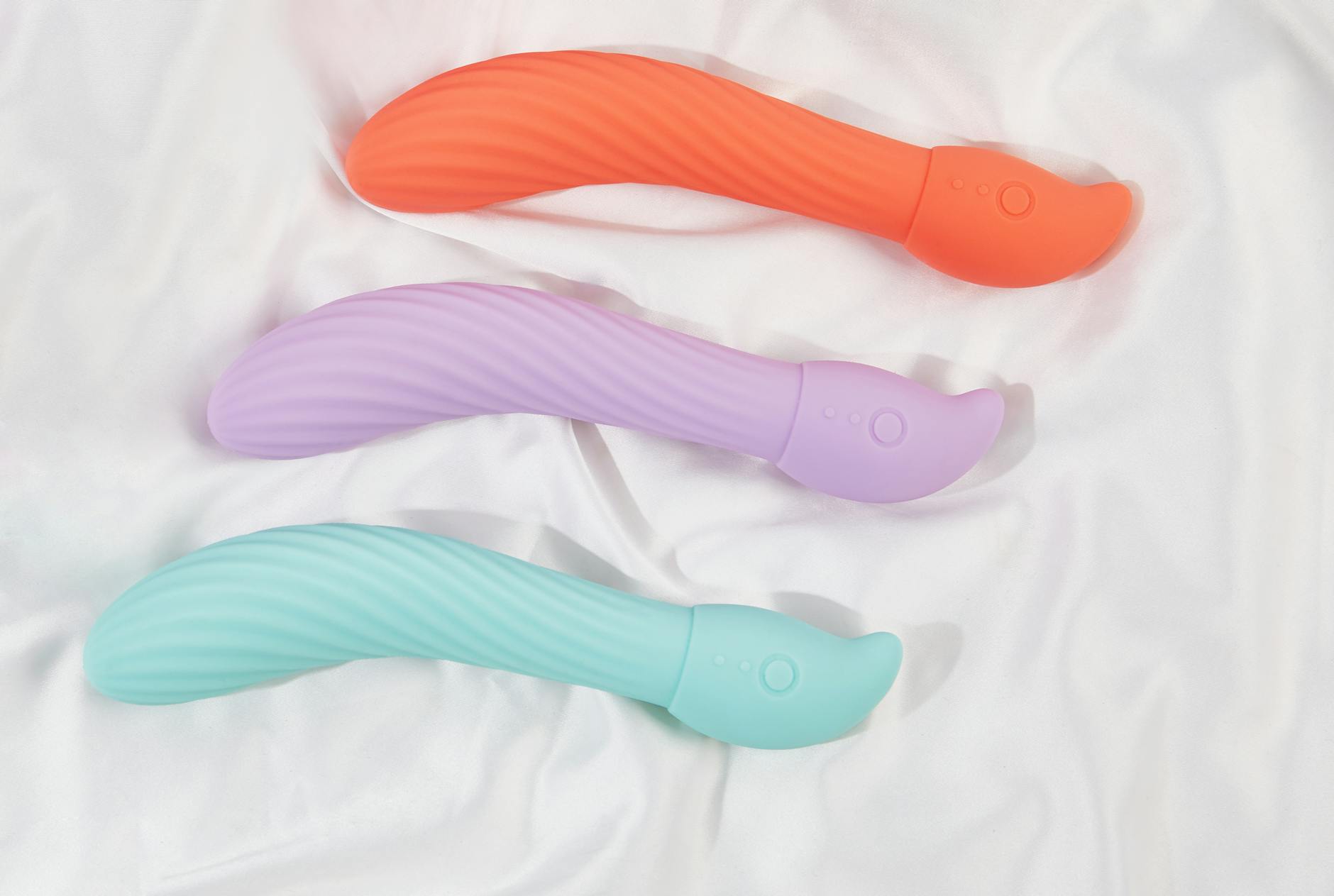
Photo by IFONNX Toys on Pexels
Common fears (and why they're usually not as big as they feel)
"Won't it make my partner feel replaced?" Only if you frame it that way. Frame it as exploration, not replacement, and most partners will feel included, not threatened.
"What if we try it and nothing happens?" Then you tried something, you were together, and you learned something about what works for you both. That's still a win.
"Isn't this weird to buy?" Hello Nancy makes purchasing incredibly straightforward, and delivery is discreet. You're not weird. Thousands of couples are having this exact conversation.
"What if I don't like it, but my partner does?" That's real information too. You can use it sometimes and not others. There's no rule saying you both have to be enthusiastic about every tool.
When to bring in more support
If you and your partner can't even have the initial conversation without tension, that's worth looking at separately before introducing anything new. A couples therapist can help with that. It's not failure. It's actually the right move.
Similarly, if desire has been absent for years and it's rooted in disconnection (infidelity, betrayal, loss of trust), a lemon vibrator won't fix that. You need the relationship work first. Tools help when the foundation is sound and you just need a way to rebuild momentum.
If one partner has significant pain with penetration or stimulation, and desire has disappeared because of that pain, talking to a pelvic health specialist is the right first step. They can rule out physical barriers before you introduce new tools.
The actual outcome most couples report
It's not that lemon vibrators transform relationships. It's that they give couples permission to stop being on autopilot.
Most long-term couples I work with aren't in crisis. They're just quiet. They've built a life together and it's solid, but pleasure has become optional, something that happens occasionally instead of something they prioritize.
Introducing something new together reminds them that their relationship is also a place for play, experimentation, and yes, pleasure. That reminder often spills over into other parts of the relationship. They touch more. They laugh more. They take more risks.
The lemon vibrator isn't the cause. It's the permission structure.
FAQ
How do I bring up wanting to use a lemon vibrator with my long-term partner?
Start casually and outside the bedroom. You might say something like, "I was reading about this, and I'm curious if you'd be interested in trying it together sometime." The key is to make it a question, not a plan. Give your partner space to think about it without pressure. If they say no immediately, ask why. If they say they need time, give it to them.
Will a lemon clitoral vibrator work for me if I've never used a vibrator before?
Absolutely. In fact, many couples find that starting together removes the awkwardness of trying something alone first. Lemon vibrators like the Hello Nancy lem are designed to be intuitive. Start on the lowest setting and work your way up as you explore what feels good.
What if my partner is worried that using a toy means I'm not satisfied with them?
That's a common fear, and it deserves a direct conversation. You might say: "I love sex with you. I also want to explore new sensations together. These aren't connected to whether I'm satisfied." Then back it up with actions. Prioritize touch, presence, and connection alongside any toy play. The tool should enhance what you already do, not replace it.
How do I make using a lemon vibrator less awkward after not having much sex for a while?
Start with foreplay that doesn't involve the vibrator. Spend time reconnecting with touch, kissing, and conversation. When you introduce the lemon vibrator, treat it like another kind of foreplay, not the main event. The awkwardness usually dissolves once you both laugh about it, so permission to be a little clumsy together helps a lot.
Is it normal to need lube with a lemon vibrator?
It depends on your body and what stimulation you're used to. Lemon vibrators use suction rather than direct friction, so many people find they need less lubrication than with other toys. That said, a little water-based lube never hurts and can increase comfort and sensation. Test it and see what your body prefers.
What if we use a lemon vibrator once and then neither of us wants to again?
That's completely fine. The point wasn't the vibrator itself. The point was that you tried something together, stayed present, and were vulnerable with each other. That connection is the real outcome, whether or not you ever use the vibrator again.
The real work is the presence, not the toy
I want to be clear about something: a lemon vibrator isn't going to save a relationship. It's not going to fix avoidance, dishonesty, or disconnection. What it can do is give you both a concrete way to say "I want to be close to you" when those words have gotten stuck.
The real work is showing up, staying curious, and remembering that your partner is still a person you want to explore with. The tool just makes that conversation easier to start.
If you're in a long-term relationship and desire has gone quiet, you don't need therapy or a breakup. You might just need permission to be playful again. And sometimes, that permission comes in the form of something as simple and unexpected as trying something new together.
Start the conversation. See where it goes. Your relationship might surprise you.