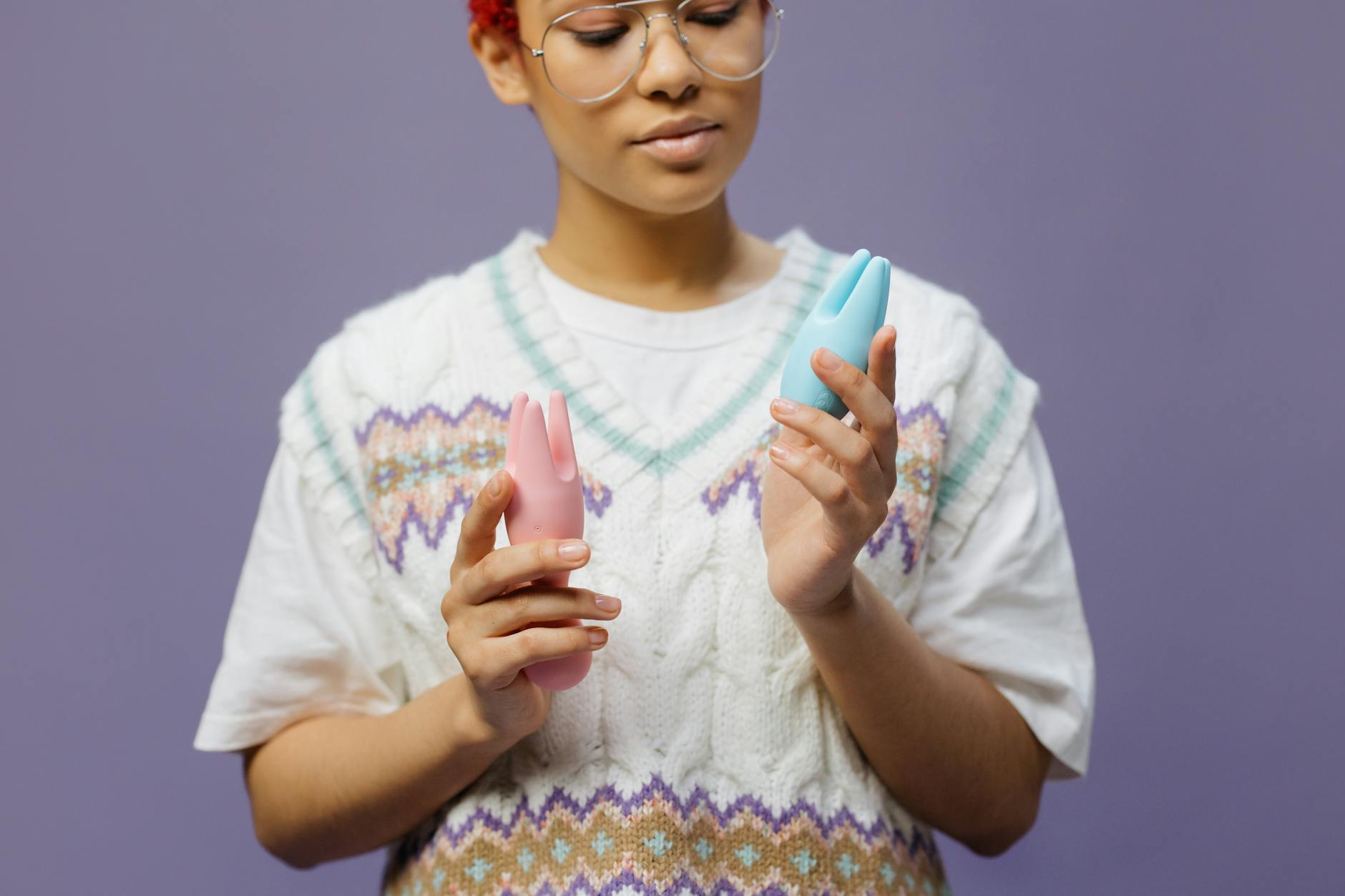
Let's start here: pleasure is not the goal
Here's the thing about recovering pleasure after trauma. Most recovery guides tell you to "get back to enjoying sex." That's backwards. Your nervous system isn't broken because you want orgasms too much. It's guarding you because at some point, someone crossed a boundary it couldn't refuse. That guard is doing its job.
So the first rule: pleasure comes last, not first. Safety comes first. Trust comes second. And then, eventually, pleasure shows up on its own.
Why your body reacted the way it did
Trauma lives in the nervous system, not just in the mind. When something forced or unwanted happened, your body learned that sex could be dangerous. That's not a malfunction. That's a perfectly rational survival mechanism. Now, when anything touches the vulva, your nervous system might freeze, tense, or even float away. Your brain might go somewhere else. Your genitals might become hypersensitive or go completely numb.
These responses make perfect sense. The body is still trying to protect you, even though the threat has passed. And tools like lemon vibrators can help you slowly teach your nervous system that pleasure can be safe, but only if you approach it on your own terms, at your own pace, with complete control.
The core principle: control is everything
Someone took control. That's what trauma is. So rebuilding has to happen through regaining it. Not in a dramatic way. Just small moments where you are deciding what happens, when it happens, and you can stop whenever you need to.
This is why lemon vibrators are useful for trauma recovery specifically. You hold it. You choose the pattern. You choose the intensity. You can stop immediately if something feels wrong. There's no partner, no performance, no obligation. Just you and a sensation you're controlling entirely.
Start by holding the toy without turning it on. Feel the shape. Notice the texture. Does it feel okay in your hand? If yes, keep it there. If no, put it down. Both are correct answers.
Moving slowly through the stages
Stage one: External exploration, clothed. Keep your underwear or pants on. Hold the lemon vibrator near your thigh or against your outer hip. Turn it to the lowest pattern. Your nervous system needs to learn that vibration equals safety. This takes weeks sometimes. There's no rush.
Stage two: External exploration, no clothes. Only when you're ready. Hold the toy near your vulva without direct contact. See if your body can be present. Notice your breathing. If your mind goes anywhere else, pause. That's information. Your nervous system is telling you something isn't ready yet.
Stage three: Indirect contact. Very gently, touch the toy to the outer labia or your mons pubis. Not the clitoris yet. Just outer sensation. Again, lowest pattern. Your job is only to notice what happens in your body. Not to achieve anything.
Stage four: Light contact. When your nervous system stops bracing, when you notice your breathing is steady, when your mind stays present for a few minutes. Then try gentle contact with the clitoral area. Still very light. Still the lowest setting.
Each stage takes as long as it needs. Days, weeks, months. There is no timeline.
Grounding techniques that actually help
Your mind will probably leave sometimes. That's called dissociation, and it's a trauma response. You're not doing anything wrong. But pulling yourself back into your body is a learned skill.
Hold something cold in your other hand. An ice cube, a cold spoon from the freezer. The temperature signals your nervous system that you're safe right now. Name five things you can see in the room. This grounds you in the present moment. Press your feet into the floor. Notice the pressure. Breathe deeply and make the exhale longer than the inhale. This tells your parasympathetic nervous system it's safe.
Many people find that having a safe word or signal helps them feel in control. Even if you're alone. You might say "stop" out loud. You might put the toy down immediately. Having that permission baked in reduces the internal pressure to "be okay with it."
What trauma survivors often get wrong
You might think that if you can't orgasm or feel numb, the tool isn't working. Wrong. If you can hold the toy, stay present for even 30 seconds, and not be flooded by panic, that's a win. That's your nervous system learning that this situation is different from what happened before.
You might push yourself because you feel like you "should" be healed by now. Wrong again. Healing is not linear. Some days your body will be more open. Some days every sensation will feel wrong. That doesn't mean you're broken or doing recovery incorrectly. It means you're human and you're healing.
You might also believe that you need to prove to a partner that you're "okay now" by performing pleasure. Please don't. Your healing is yours alone. If and when you choose to involve a partner, that's a separate conversation with different rules.
When to work with a professional
If you're having flashbacks during solo pleasure, that's normal at first. But if they're severe or you're having trouble sleeping afterward, a trauma-informed therapist can help. There's no shame in that. In fact, it's one of the smartest things you can do.
A somatic therapist (someone trained in trauma and body-based healing) is particularly helpful. They understand that your nervous system is the issue, not your willingness or desire. They can teach you techniques that lemon clitoral vibrators complement really well.
Some people also benefit from working with a sex therapist who specializes in trauma. This is different from talking to a regular therapist. A sex therapist understands the specific intersection of trauma and pleasure and can troubleshoot what's happening in your body.
The permission you need to hear
You don't owe anyone pleasure. Not yourself, not a partner, not the world. You're not broken because sex feels scary or numb. You're not failing recovery because progress is slow. You're not "too much" if you need months of slow, gentle exploration before anything feels good.
Your body protected you when it could. Now you get to teach it slowly, gently, that there are moments when protection isn't what's needed. Presence is. Safety is. Pleasure, when and if it comes, is a gift your nervous system is ready to receive.
Start very small. Control is the foundation. Everything else builds from there.
People also ask
Can I use lemon vibrators if I'm still experiencing flashbacks?
Yes, but with care. A flashback during solo play is different from one happening suddenly in daily life. You have control. If a flashback starts, stop immediately. That's not failure. That's your nervous system communicating. Over time, as you practice grounding and as your therapist helps you process the original trauma, flashbacks during solo play will likely decrease. But moving slowly is key. Consider working with a trauma-informed therapist who can help you distinguish between a flashback and normal nervousness.
How long until sex feels normal again?
There's no standard timeline. For some people, pleasure comes back within months. For others, it takes years. The goal isn't to return to "normal." The goal is to build a new relationship with your body and pleasure, one that's rooted in your own agency and consent. This new relationship might feel very different from what came before, and that's actually okay. It might be better.
Is it normal to feel nothing at all when using a lemon vibrator?
Completely normal. Numbness is a trauma response. Your body might be protecting you by dampening sensation. This doesn't mean the vibrator isn't working or that you're broken. It means your nervous system needs more time to learn that this stimulation is safe. Many people find that after weeks or months of gentle, controlled exploration, sensation gradually returns. If it doesn't, a somatic or sex therapist can help investigate what's happening.
What if I start feeling aroused but then panic?
This is called "approach-avoidance" and it's incredibly common in trauma recovery. Your nervous system is both drawn to pleasure and scared of it. When the fear wins, you panic. This doesn't mean you're doing something wrong. It means you've reached the edge of what your nervous system can handle right now. Back off, ground yourself, and try again another day. Gradually, your window of tolerance for arousal will widen.
Can a partner help me use lemon vibrators for healing?
Only if you're ready and only if the relationship is safe and based on genuine consent. Even then, solo exploration first is usually better. You need to rebuild trust in your own body before involving someone else. If you do decide to share this with a partner, be very clear about what you need: maybe they stay in the room but don't touch. Maybe they're in another room entirely. Maybe they leave you completely alone. Your comfort is non-negotiable.
What's the difference between trauma numbness and normal reduced sensation?
Trauma numbness often comes with a sense of distance from your body, like you're observing yourself from outside. Normal reduced sensation is more like your genitals just aren't responding as much, but you're still present in your body. If you're not sure which you're experiencing, a therapist can help you figure it out. Either way, slow, gentle exploration with complete control helps both.
Moving forward
Recovering pleasure after trauma is one of the most courageous things you can do. It means saying to your nervous system, "I know you're trying to protect me. And I'm going to slowly, gently teach you that safety and pleasure can exist together." That's not easy. But it's possible. Thousands of survivors have done it. And lemon vibrators, used slowly and with full control, are a useful tool in that process. Your body will tell you when it's ready to move forward. Listen to it.