
Let's name what actually happened
Your partner mentioned toys and something in you went tight. Maybe it was shame, maybe it felt like criticism, maybe you thought "isn't my body enough?" The question landed like an accusation instead of an invitation. That reaction is completely legitimate, and it's also completely worth examining.
Here's what I've learned from years of working with couples: hesitation about toys is almost never really about the toy. It's about what the toy seems to symbolize. And the good news is, once you separate the object from the meaning, everything shifts.
What the hesitation actually signals
When a partner suggests toys, our nervous system often reads it as "I'm not satisfied" or "you're not enough." Sometimes that's projection. Sometimes it's picking up on a real thing they haven't articulated well. Either way, the conversation gets stuck before it starts.
But here's what research on couples and pleasure actually shows: introducing toys doesn't replace intimacy. It often deepens it, because it requires communication, boundary-setting, and mutual vulnerability in real time. It's the opposite of shutting each other out.
The hesitation you're feeling might be protecting something important. Maybe you were raised to believe pleasure should happen a certain way. Maybe an ex was selfish and you've built walls around vulnerability. Maybe you're worried about comparison or judgment. Those are real issues worth naming.
What they're not is a reason to avoid the conversation. They're a reason to have it better.
The conversation before the toy
If your partner wants to bring lemon vibrators or any clitoral vibrator into your shared pleasure, the toy is step four. Steps one through three are all talk.
First, find a time that's not sexual. Not in bed, not when you're already intimate. Sit down with tea or coffee and ask them directly: "When you mentioned toys, what were you actually hoping for?" Listen without defending. They might say "I want to see you feel good," or "I want to know what you like," or "I'm curious about trying something new together." The specifics matter.
Second, tell them what you felt. "When you brought that up, I felt anxious because..." Fill in your own blank. Shame. Fear of judgment. Old stuff from your past. All of it is information, not failure.
Third, establish what consent actually looks like. That means: you get to say no. You get to say yes to looking but not trying yet. You get to try it solo first. You get to change your mind mid-experience. Your partner gets to want this without it becoming a demand. Consent is ongoing, not a one-time yes.
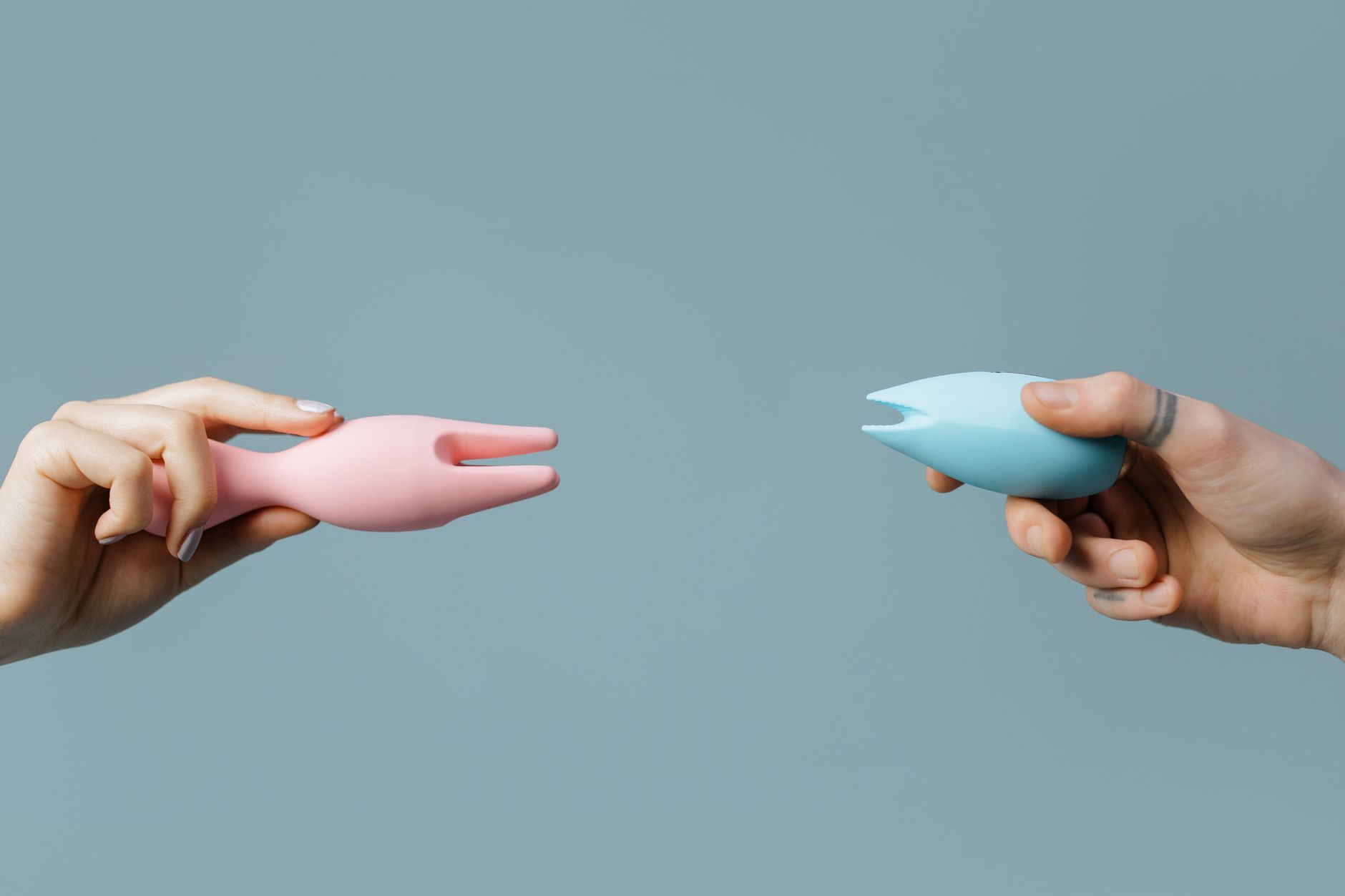
Photo by cottonbro studio on Pexels
Why lemon vibrators shift the dynamic
When you're hesitant, the wrong toy makes it worse. A traditional vibrator that's purely mechanical, impersonal, loud. It feels clinical. It confirms the fear that this is about efficiency, not connection.
Lemon clitoral vibrators work differently. They use suction and gentle pulsing instead of brutal vibration. That's physically different, but it's also psychologically different. The sensation feels more intimate, less aggressive. It requires less pressure and more presence.
For hesitant partners, this matters. A lemon vibrator isn't something that replaces you. It's something that works with you. It's quiet enough to maintain eye contact and conversation. It's small enough to feel integrated into what you're already doing, not like a prop that dominates the experience.
Many couples tell me that using a lemon clitoral vibrator together, with your partner's hands still involved, with kissing happening, with checking in happening. That's not a toy experience. That's an amplified version of intimacy you were already having.
Starting solo first
If you're still nervous, you don't have to use it with your partner right away. Honestly, I recommend against it. Use a lemon vibrator alone first, no pressure, no performance.
Set an afternoon where you're genuinely relaxed and curious. Not stressed about time, not checking your phone. Understand what the sensation actually feels like on your body before introducing another person's expectations into it. This is about you learning your own response, not proving anything to anyone.
Notice what patterns surprise you. Notice what feels good and what doesn't. Notice if shame comes up and where it lives in your body. All of this information makes the partnered experience better, because you're not defending or performing. You're just present.
Many of my clients report that solo exploration with lemon vibrators is actually what flips their nervous system. Suddenly the hesitation wasn't really about the toy. It was about trust in themselves. And that's something you can actually build.
Bringing it into partnered pleasure
When you're ready, the conversation is different. Not "I tried the toy," but "I tried the toy and here's what I discovered." Share three things: one thing that surprised you, one thing that felt good, one question you still have.
Then ask your partner the same thing. Not about using it, just about their curiosity. What made them want to explore this? What are they hoping the experience will be like? Get specific.
When you actually use a lemon vibrator together, keep it simple. Start clothed if that helps. Start with kissing and touch and introduce it when you're already aroused. Let your partner hold it if that feels safer, or keep control yourself. Talk through it. "That feels good." "That's too intense." "I want to stop." "Can you try a different pattern?"
The toy isn't the point. The conversation is. The checking in is. The willingness to be curious together instead of defended is.
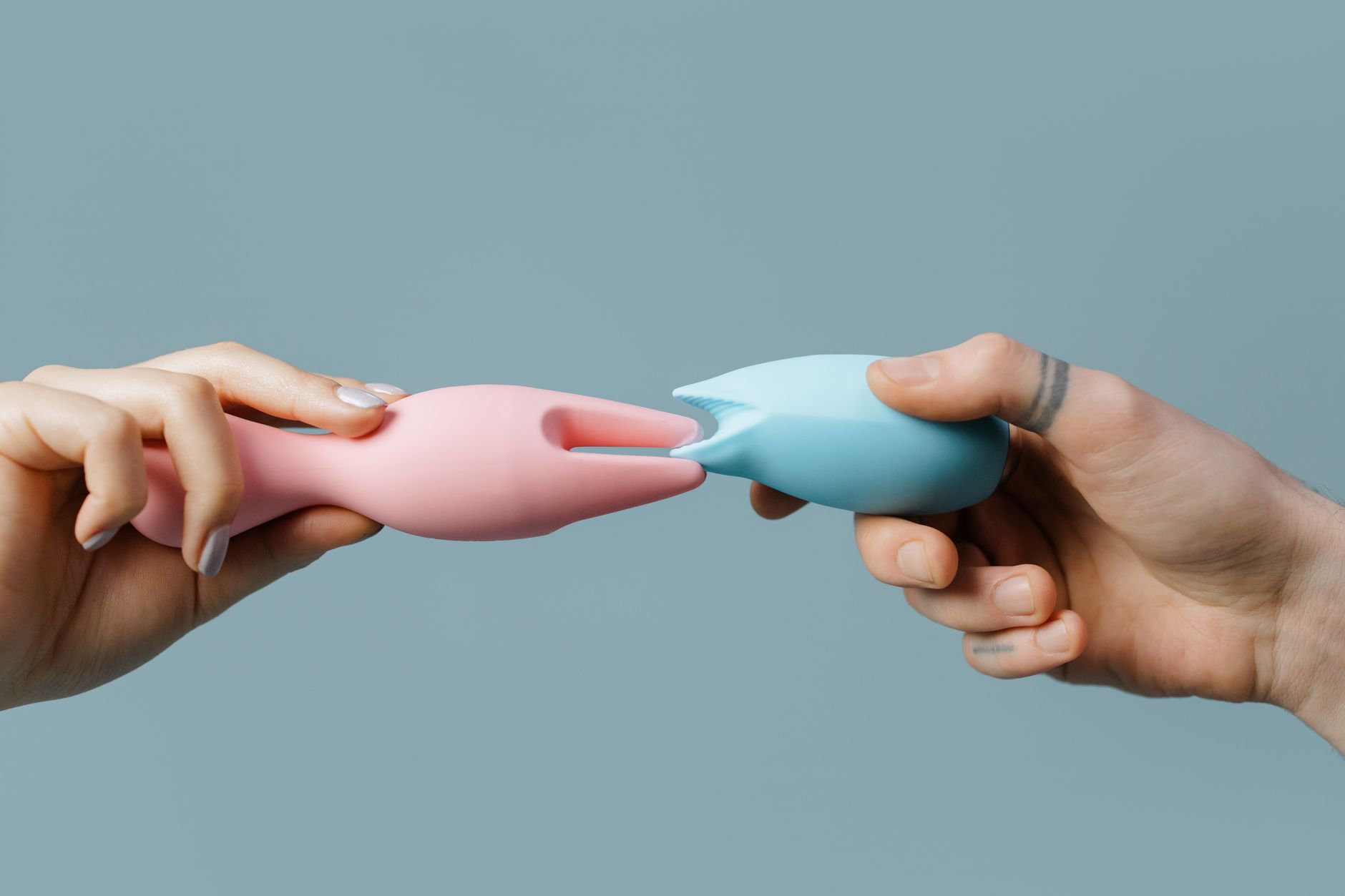
Photo by cottonbro studio on Pexels
When the hesitation is actually a boundary
Sometimes you work through the fear and you still don't want toys. That's not a failure. That's information. And it's fine if it's a real no.
What's not fine is a no that's actually "I don't know how to talk about this, so I'm shutting it down." Those look the same from the outside, but they're completely different on the inside.
A real no sounds like: "I've thought about it and it's genuinely not for me." A defensive no sounds like: "Absolutely not, don't bring it up again." One is a boundary. One is a wall.
If toys truly aren't your thing, that's okay. But make sure your partner knows why. Is it discomfort? Is it logistics? Is it a real values thing? If your partner needs this and you genuinely don't, that's a conversation for both of you to have honestly, maybe with a therapist present. Sometimes it's negotiable (they use toys solo, or you use them together but in a different way). Sometimes it's a genuine incompatibility.
But at least you'd be making that choice from clarity, not from fear. And that's when a relationship either deepens or shifts in a conscious way.
The trust part
What I see most often is this: partners suggest toys not because they're bored, but because they're hoping for more connection. They want to see you lose control. They want evidence that you feel safe enough with them to be vulnerable. They want intimacy that goes past the surface.
When you're hesitant, they sometimes read that as you not trusting them. And sometimes they're right to pick up on that. But not always.
If you don't trust your partner, bringing toys isn't going to fix it. That's a different conversation, maybe one for a couples therapist. But if your hesitation is just old shame or learned messages about "good girls don't," then moving toward curiosity is actually a way of deepening the trust.
Using a lemon vibrator together, with all the conversation and consent and presence that implies. That's not a sign that something's missing. That's evidence that you're both willing to get messy and honest together. That's intimacy.
Common questions about introducing toys to a partner
What if my partner gets jealous of the toy?
That's usually about something else. Jealousy of an object is rare. What's more likely is they want to feel essential, or they're insecure about their ability to satisfy you, or they're picking up on distance between you. Don't reassure them that the toy isn't better. Instead, reassure them that they matter. That the toy is something you're exploring together, not instead of them. That you want their hands, their presence, their specific attention. The toy is an addition, not a replacement.
Should we buy the toy together or should one of us surprise the other?
Together. Full stop. Choosing it together is part of the consent and conversation. It also means you get to pick something you're actually comfortable with, rather than managing surprise and shame at the same time. Take your time looking at options. Read reviews. Talk about what appeals to you and why. That conversation is sexy too.
What if I use the toy and nothing happens? What if I don't orgasm?
Then nothing happens. Which is totally fine. Not every experience has to be a home run. Sometimes the point is just learning what your body likes, or spending time together, or trying something new. If you're already putting pressure on yourself to perform, adding a toy won't help. Use it because you're curious, not because you have a quota to hit.
How do I know when I'm actually ready to try it with my partner?
When you can think about it without your nervous system activating. When you've had the conversations. When you've explored solo if that felt important. When you feel curious instead of obligated. When you can imagine it as something you're both doing together, not something being done to you. There's no timeline. Six weeks, six months. You know.
What if my partner pushes past my boundaries about toys?
Then you have a partner problem, not a toy problem. A partner who respects you will wait. They'll have the conversation. They'll move at your pace. If they're pushing, pressuring, or guilt-tripping you about this, that's a relationship issue that needs professional attention. You don't owe them access to your body in any configuration.
Can lemon vibrators actually make sex better for both partners?
Yes, when the relationship foundation is sound. They can amplify sensation, reduce performance pressure, and create a shared experience of exploration. But they're not a fix for bad communication or low trust. They work best when you're already committed to showing up for each other.
The actual truth
Your hesitation is worth listening to. It's not something to push past. But pushing past fear is different from honoring a boundary. One is expansion. One is self-protection. Figure out which one you're doing.
If it's expansion, then yes. Have the conversation. Get curious. Maybe try a lemon vibrator, maybe not. But move toward your partner instead of away. The intimacy is in the willingness, not the object.
If it's a boundary, honor it. But know what it's protecting and why. And talk to your partner about what that means for both of you.
Either way, you deserve a relationship where desire is invited, not demanded. Where toys are a conversation, not an ambush. Where your hesitation is met with patience instead of pressure.
Start there. The toys come later.
FAQ
How do I bring up toys to my partner if they mentioned it but I shut them down?
Go back to them when things are calm and say something like: "I reacted badly when you mentioned toys. I was nervous. Can we talk about it again?" That vulnerability matters more than perfect words. They'll appreciate you trying.
Are lemon vibrators better for hesitant couples than other toys?
They can be. The suction sensation is less intense and more intimate-feeling than traditional vibration. The size is smaller, which feels less clinical. But the most important thing is that you choose something together and use it with full communication.
What if my partner suggested toys because they're bored with me?
Maybe. Or maybe they're bored with the same patterns and want to explore together. Those are different problems. A therapist can help you figure out which one you're actually facing.
How do I stop feeling ashamed about wanting to try toys?
Remember that pleasure is yours to claim. Not selfish. Not shameful. Yours. Every time the shame comes up, name it: "That's a message I learned, not a fact about me." Over time, those messages lose power.
Can we use a lemon clitoral vibrator if my partner and I have different levels of desire?
Possibly. If the lower-desire partner is using it, it can reduce the time needed for arousal, which helps mismatched couples. If the higher-desire partner is using it during foreplay, it can build intensity faster. But toys won't fix a fundamental mismatch in desire. That's a bigger conversation.
What happens after the first time we use toys together?
You check in with each other. Not right after, when you're still floating. Later, maybe the next day. "How did that feel?" "What did you like?" "What would you want to try differently?" This is just another conversation, not a test. You're gathering information together.