Let's talk about the real block
Here's what happens after five years together, ten years, twenty. Sex becomes something you do, not something you explore. You know what works. You know roughly how long it takes. You know what your partner likes. And knowing all that? It somehow makes it harder to be curious, not easier. The predictability starts to feel like comfort and ends up feeling like routine. You're having sex, maybe even regular sex, but you're not discovering anything anymore.
That's where a lot of long-term couples get stuck. Not in a crisis. Not in disconnection exactly. Just in a kind of sexual flatness where nothing breaks, but nothing surprises either. And when surprise leaves the bedroom, intimacy often follows.
Why toys feel risky after years together
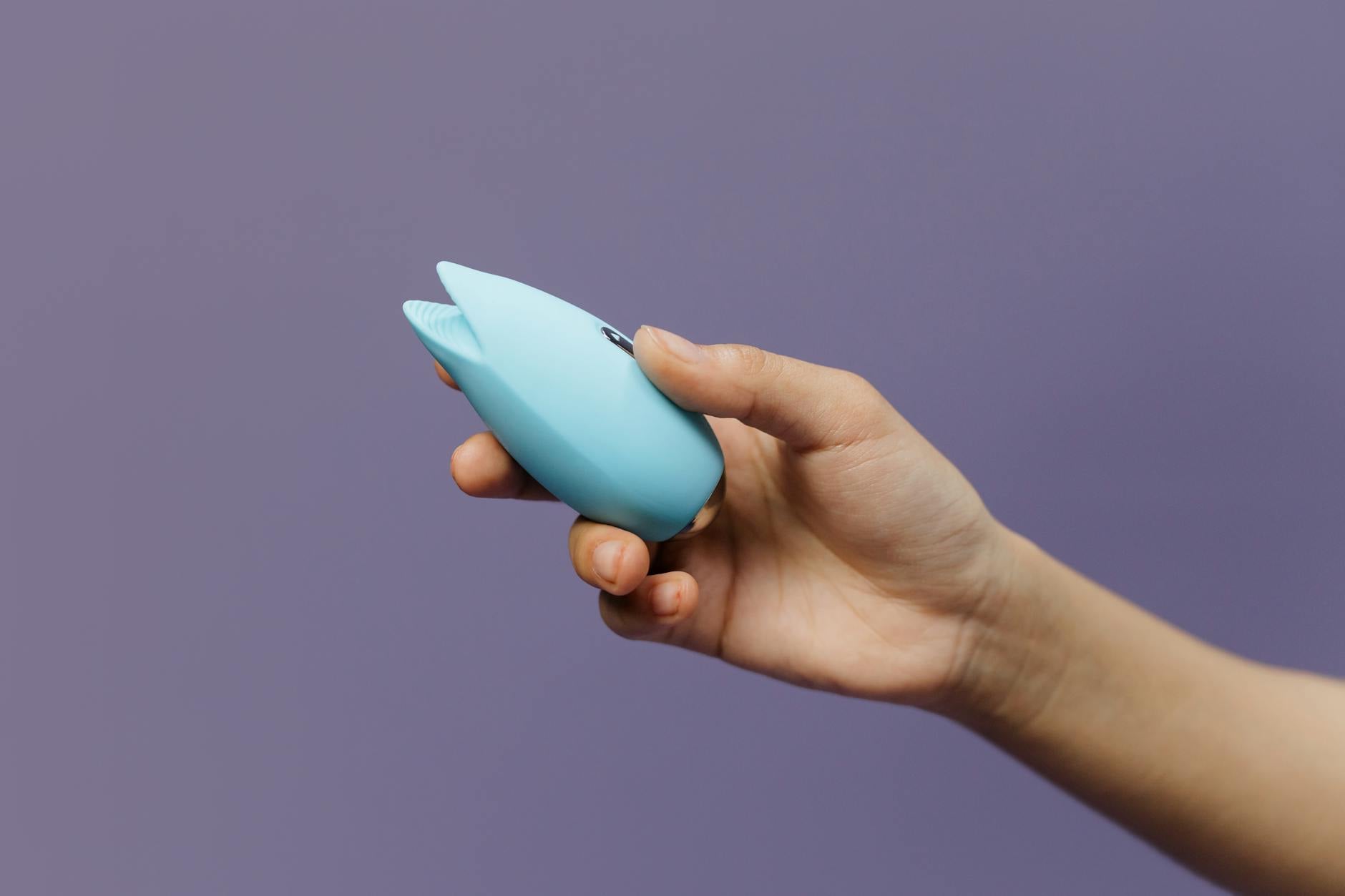
Introducing a lemon clitoral vibrator into a long-term relationship is different from picking one for solo play. When you're alone, a toy is just about sensation. When you're with a partner, it can feel like a referendum on what you've been doing together for years. It can feel like "I wasn't satisfied" or "You weren't enough" or "I need something you can't provide."
None of those readings are actually true most of the time, but they live in the room anyway. And couples who've been together a long time often avoid that discomfort by just not introducing anything new at all. You'd rather have adequate sex than risk a conversation that might unearth resentment.
But here's the thing that research on long-term couples consistently shows. Novelty doesn't break connection. Avoidance does. The couples who maintain sexual interest and emotional intimacy over decades aren't the ones who had it figured out from the start. They're the ones willing to say "I want to try something different" and to actually be curious about why.
Reframing the conversation
The first step is separating the toy from the relationship status. A lemon clitoral vibrator isn't a verdict on your partnership. It's a tool for exploration. And exploration is what keeps couples bonded.
If you've been together a long time, you likely have some trust already built. Use that. The conversation doesn't have to be heavy. It can be as simple as "I've been curious about trying this together" or "I read that couples often rediscover things when they introduce novelty, and I want that with you."
Not "our sex life is boring." Not "you're not doing it right." Just curiosity. Directness. Vulnerability.
Your partner might be relieved. They might have been wanting permission to suggest something too. Or they might be hesitant. If they're hesitant, ask why. Really listen. Sometimes the block is genuine concern. Sometimes it's embarrassment. Sometimes it's a worry that you're not attracted to them anymore.
All of those are conversations worth having anyway. The toy is just an honest excuse to have them.
How to actually introduce it physically
Start by using it solo in front of your partner. Not as a performance. Just as a matter-of-fact thing. You're showing them what pleasure looks like on your face when you're relaxed, when there's no pressure. When you're building toward something on your own timeline.
This is important because long-term couples often stop watching each other have pleasure. Sex becomes about the interaction, not about witnessing. And witnessing vulnerability is what deepens bonds. So let them see you enjoying sensation without needing anything from them in that moment.
Then, once you're both comfortable, try using the lemon vibrator while they're touching you elsewhere. Not penetration necessarily. Hands on your chest, your neck, inside your thighs. The lemon clitoral vibrator does the focused work while they're doing the connected work. You're both contributing to the same arc of pleasure. That's collaborative.
The pacing shift that changes everything
After years together, sex often speeds up. You both know what works, so you just do it. There's efficiency to it. But efficiency is the enemy of discovery.
When you introduce a tool like a lemon vibrator, slow everything down. This isn't about racing to an orgasm. It's about 20 minutes of touching, talking, noticing. Notice where your partner looks at you. Notice when they hold their breath. Ask them what they're thinking. Stupid couples who've been together forever still don't know how to ask "What turned you on about that?"
Ask. Listen. Let the pleasure take longer. The lemon clitoral vibrator's intensity pattern can actually help with this because you're not fighting a clock. You can stay with sensation instead of chasing a finish.
Building shared language around pleasure
One of the most underrated things couples can do is develop a vocabulary for pleasure that's actually theirs. Not porn language. Not clinical language. Just specific words you use together that mean something between you.
When you're exploring with a lemon vibrator, you're naturally creating that vocabulary. "That spot right there" becomes something only the two of you talk about in that specific way. "The way you hold still while I" becomes an inside thing.
This isn't frivolous. Shared language is how couples build intimacy. It's the difference between having sex and having your kind of sex. And your kind of sex, the one that's custom built over years and reinforced through these moments, is what holds people together.
Addressing the performance pressure
Sometimes long-term couples introduce a toy and then one partner feels like they should now be able to make the other come using it. That the tool somehow becomes a test of their competence. That's a trap.
A lemon clitoral vibrator isn't about your partner's skill. It's about access to sensation you can't replicate with hands. There's no pass or fail. There's just exploration.
If orgasm isn't happening, that's not a failure. You might be nervous. You might need different stimulation. You might need the conversation to shift somewhere else entirely. Stay curious instead of results-focused.
The reconnection bonus
Here's what happens when couples who've been together for years actually do this. For a few weeks or months, they're paying attention again. They're noticing things about each other. They're having conversations that go somewhere. The sex gets better, sure, but the actual intimacy gets better too.
You remember why you chose this person. Not in a sentimental way. In a physical, visceral way. You find out there are still things to learn about what they enjoy. You notice your own desire again because you're not operating on autopilot.
That's what a lemon vibrator can actually offer a long-term couple. Not a fix. Not a solution to a broken thing. Just an excuse to be curious together again. And curiosity is what keeps people bonded after the initial spark fades.
Small practical things that matter
Use water-based lubricant. It makes everything feel richer, and it's essential if you're both touching sensitive tissue. Keep the lemon vibrator charged and accessible, not hidden away. Accessibility makes it less of a production and more of just part of what you do. Talk about it after, not just during. "That felt different when you did that" or "I liked how we slowed down." Those conversations are where the real reconnection happens.
And if introducing the toy doesnishes doesn't work, that's information too. It's worth asking why. Is it shame? Is it pressure? Is it that you'd both rather find connection some other way? There's no wrong answer. But there's a wrong answer to "is it worth exploring." The answer to that is always yes for long-term couples.
People also ask
How do I bring up using lemon vibrators with my long-term partner without making them feel insecure?
Frame it as adventure, not critique. "I want to explore more with you" is different from "what we're doing isn't working." Most long-term partners are actually relieved that someone is willing to suggest something. The insecurity often comes from avoidance, not from the toy itself. If your partner is hesitant, ask genuine questions about their concerns instead of trying to convince them. Listening to the worry underneath is how you build safety around the idea.
Can using a lemon clitoral vibrator together actually improve emotional intimacy, or is that overstated?
It depends entirely on how you approach it. If you use it as a tool for exploration and conversation, absolutely. You're being vulnerable together, trying something new, paying attention to each other's pleasure. That builds intimacy. But if you're using it as a quick fix for a disconnected relationship, it won't magically solve anything. The tool works when the willingness is already there.
What if my partner likes the lemon vibrator so much they only want to use it, and don't want to touch me anymore?
That's worth a conversation, but it's not necessarily a crisis. Sometimes partners need permission to prioritize their own pleasure. But if you're feeling replaced or disconnected, say that directly. "I miss being touched by you" is a valid need. The solution might be combining both. You use the lemon vibrator while they touch you elsewhere. You use it solo while they watch and stay present. There are lots of ways to keep connection in the picture.
How often should we use lemon vibrators together if we're trying to rebuild intimacy?
There's no right frequency. Some couples use them regularly. Some use them occasionally. The point isn't the frequency. It's that you're being intentional about pleasure together. If you're introducing them to rebuild connection, do it when you both feel present and willing. Once a week is better than daily obligation. Quality matters more than repetition.
Is using a toy during partnered sex the same as solo play with a lemon vibrator?
Not even close. Solo play is about you and sensation. Partnered play is about you, sensation, and witnessing. The emotional dimension completely changes the experience. You're inviting someone into your pleasure. You're watching theirs. That vulnerability is what rebuilds intimacy. A lemon clitoral vibrator is just the tool. The real work is the presence you bring to it together.
What if using a lemon vibrator together brings up resentment or other relationship stuff we've been avoiding?
That's actually a feature, not a bug. If resentment comes up, it was there anyway. The toy just gave you an honest reason to address it. Relationships that last are the ones where couples can have hard conversations and work through them. If introducing a lemon vibrator cracks open something that needs repair, do the repair work. That's what deepens bonds over time.
The real outcome
Using lemon vibrators together after years with a partner isn't really about the toy. It's about deciding that your pleasure matters enough to be curious about it. It's about telling your partner "I want to keep discovering you and having you discover me." It's about being willing to be a little awkward and a little vulnerable because the alternative, which is settling into comfortable predictability, slowly erodes intimacy.
The couples who stay connected over decades aren't the ones who had it figured out early. They're the ones who kept showing up with curiosity. Who kept asking for what they wanted. Who kept being willing to explore, together. A lemon clitoral vibrator is just an honest tool for that work. If you'd like personalized guidance on navigating this conversation with your specific partner, reach out to us. Sometimes talking through it with someone trained in couples dynamics helps.
References
- Meston, C.M., & Frohlich, P.F. (2000). The neurobiology of sexual function. Archives of General Psychiatry, 57(11), 1012-1030.
- Gottman, J.M., & Silver, N. (2015). The Seven Principles for Making Marriage Work: A Practical Guide from the Country's Foremost Relationship Expert. Harmony.
- Perel, E. (2006). Mating in Captivity: Unlocking Erotic Intelligence. HarperCollins.
- Taormino, T. (2012). The Ultimate Guide to Sex and Disability. Cleis Press.