
Let's start with the honest part
Your arousal isn't broken just because it's inconsistent. Most of us have been sold a lie that desire works like a light switch. It doesn't. For some people, arousal is more like a dimmer with a faulty wiring job.
One week you're wet within two minutes. The next week, even with a partner you love or your favorite fantasy, it takes twenty. Or forty. Or it creeps up slowly over an hour and never quite reaches that peak intensity you remember from last month. This isn't dysfunction. This is variable arousal patterning, and it's far more common than you'd think.
Here's what you need to know: using lemon clitoral vibrators when your arousal patterns shift is absolutely possible. You just need to stop fighting the dimmer and start working with it.
Why arousal is never one speed
Arousal varies for about a hundred different reasons, and most of them don't involve anything being "wrong" with you.
Stress does this. A deadline at work, conflict with a partner, family stuff pending. The body's threat-detection system turns up, cortisol rises, and your parasympathetic nervous system (the one that allows pleasure to happen) goes quiet. You might feel desire but not the physical response that usually follows. That disconnect is real.
Sleep debt does this. Running on five hours for three nights in a row doesn't just make you tired. It dysregulates your whole dopamine and serotonin system. Arousal depends on both of those.
Cycle phases do this. If you menstruate, your arousal curve shifts across your cycle. Follicular phase you might feel desire come on fast. Luteal phase, especially right before your period, arousal often needs more time to build, even if you want it.
Medication does this. Antidepressants, antihistamines, even birth control can shift how quickly you respond to stimulation. That's not your imagination. It's pharmacology.
Age does this. Your 20s and your 40s handle arousal differently. That's biology, not decline.
Routine does this. After years of the same touch in the same order, your nervous system stops paying attention. Novelty matters.
Most of the time, variable arousal is just your body accurately reflecting what's happening in your life and your nervous system. It's not a problem to fix. It's a signal to pay attention to.
How lemon sexual toys adapt to your shifting rhythm
The beauty of a lemon clitoral vibrator, especially one with multiple patterns and intensity levels, is its flexibility. Unlike a partner's touch, which gets tired or bored, a clitoral suction toy can meet you exactly where you are.
If arousal is slow today, you're not stuck in the box of "foreplay was supposed to feel good ten minutes ago." You can start on pattern 1, stay there for however long you need, then shift to pattern 3 only when your body has caught up.
Lemon adult toys work this way because they bypass the pressure to perform on someone else's timeline. There's no one watching the clock. No one feeling let down if it takes longer. You can spend 45 minutes on low stimulation while your parasympathetic nervous system gradually wakes up, and that's not "failure." That's perfect.
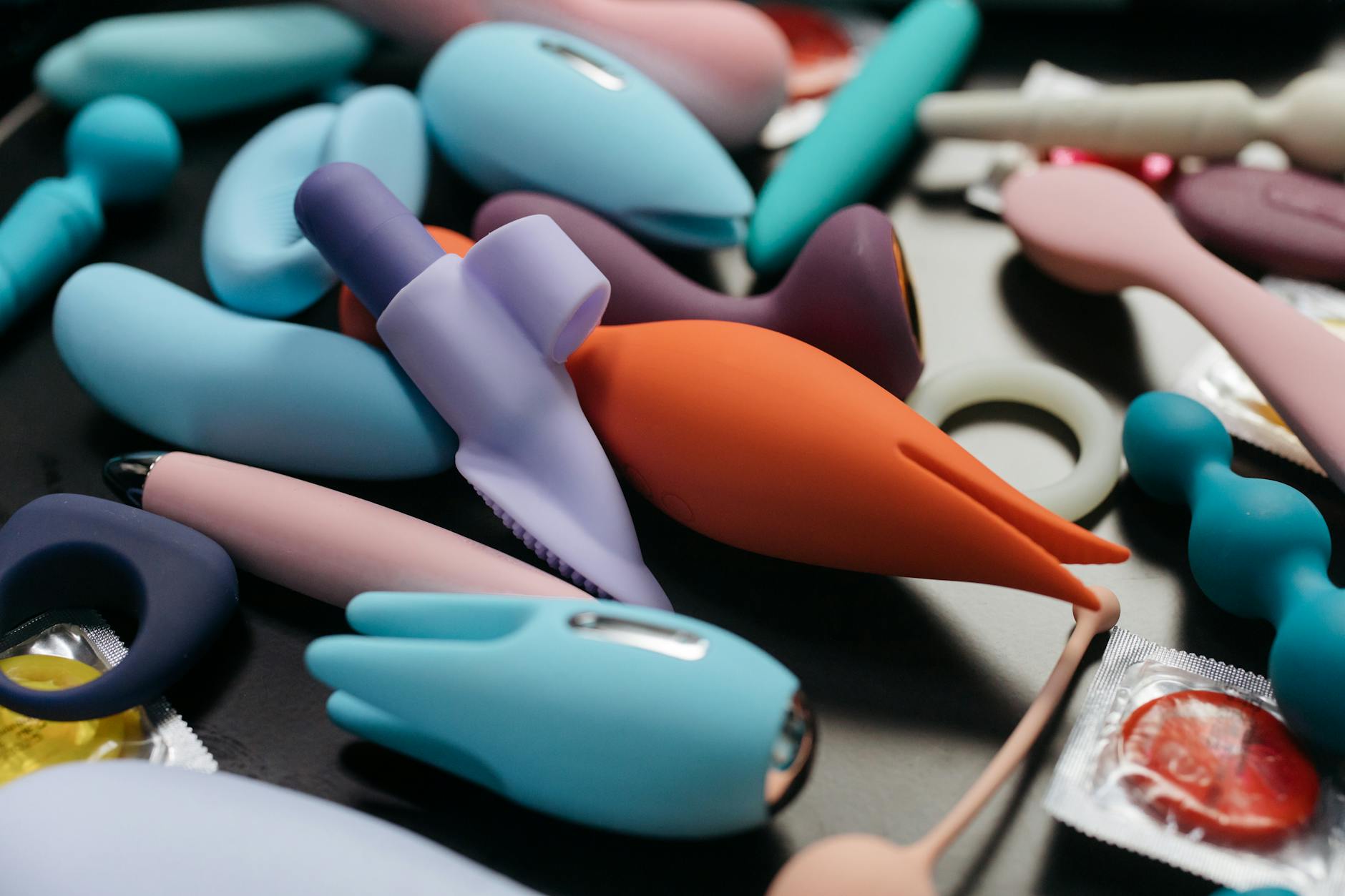
Photo by cottonbro studio on Pexels
The practical playbook for inconsistent arousal days
Here's what I tell people when they say, "Some days I just can't get going."
Day one: Fast arousal. You feel desire immediately. Your body is ready. Use your lemon clitoral vibrator at patterns 2 or 3 right away. Don't force yourself to warm up slowly if you don't need to. Meet yourself where you are. This is actually the harder conversation than you'd think. Many people feel like they "should" spend time on foreplay even when they're ready now. You don't owe slow build-up to anyone.
Day two: Slow arousal. Today nothing feels particularly arousing. You want to try, but your body's being sluggish. Start with pattern 1, very low intensity. This isn't about rushing toward an orgasm. This is about waking up your nervous system. Think of it as a 15-minute extension of foreplay. You're not trying to come yet. You're just coaxing your body to pay attention. Usually, somewhere between 10 and 25 minutes on pattern 1, something shifts. Your breathing changes. You feel a subtle warming. That's the sign to maybe move to pattern 2. But if it doesn't shift, that's okay too. Sometimes arousal that day tops out at "pleasant and mellow." That's still valid.
Day three: Fragmented arousal. You get to a certain level of arousal, maybe even close to orgasm, and then something derails you. A random thought. Tension in your shoulders. A sound from outside. Your partner shifts position. You're back at baseline. This happens constantly, especially if you're stressed or your attention keeps splitting. For fragmented arousal, I recommend longer warm-up time on lower patterns. Build arousal more gradually so you have more buffer. Also, consider environmental stuff. Close the door. Put your phone in another room. Let your partner know you need them to not talk for the next 20 minutes. These are tiny tweaks that help the nervous system stay online.
Day four: Delayed peak arousal. Your body is responding. You're enjoying the sensation. But the intensity just won't climb to where it usually does. The reason is often deeper than you'd expect. Have you been a little disconnected from your body? That's depersonalization, which happens to tons of people under stress. Are you watching yourself have pleasure rather than experiencing it? That's spectatoring, a very common pattern. In both cases, slow way down. Instead of moving up in intensity, go back to pattern 1. Let yourself feel the sensation rather than chase it. This is a gentler reboot.
The mental component that changes everything
Here's the part that most people skip over, and honestly, it's the most important.
Variable arousal only becomes a problem when you attach meaning to it. When slow arousal means "something's wrong with my desire." When fast arousal means "I must not really care about my partner." When fragmented arousal means "I'm broken."
None of those stories are true. They're just interpretations, and interpretations steer behavior.
If you believe slow arousal is a warning sign, you get anxious about it, which makes the nervous system even less parasympathetic, which makes arousal even slower. You've just created the exact problem you feared.
The reframe that works: variable arousal is information, not a verdict. Some weeks your nervous system is more available. Some weeks it's not. The job is to notice which one it is today, then use the tool you have (your lemon clitoral vibrator, your partner's touch, your imagination) in the way that actually works for right now.
That's not settling. That's intelligent pleasure.
When to check in with a professional
Variable arousal is normal. Arousal that's changing drastically from your baseline, especially if it's paired with mood changes, fatigue, or pain, deserves a check-in with someone who knows your medical history.
Different things can cause arousal shifts: medication changes, thyroid issues, hormonal contraception, relationship stress, depression, autoimmune conditions, even caffeine intake. A good GP or sex therapist can help you figure out which one.
For now, know this. If your arousal was consistent for years and suddenly isn't, that's worth mentioning to a doctor. If your arousal was always variable and you're just now learning how to work with it using tools like clitoral vibrators, you're exactly where you need to be.
FAQ: Variable arousal and lemon clitoral vibrators
Why does my arousal take 30 minutes some days and 5 minutes other days?
Arousal speed depends on stress levels, sleep, your menstrual cycle, medication, relationship dynamics, and whether your nervous system feels safe. It's like asking why your appetite varies. Sometimes you're ravenous; sometimes you're not hungry at all. Both are normal. If the variation is extreme or new, check with a doctor. Otherwise, it's just how human bodies work.
Can a lemon vibrator help if I'm stuck in a slow arousal pattern?
Yes, but not the way you might think. A clitoral vibrator can help wake up your nervous system when arousal is slow, but it won't force anything. The goal is to use patterns 1 and 2 as a gentle nudge rather than a forceful push. Sometimes that nudge helps. Sometimes you just need to accept that today's arousal caps out at medium-low, and that's okay.
What if arousal feels fragmented and I keep losing it?
Fragmentation usually points to either stress (your nervous system isn't fully parasympathetic) or attention splitting. Try removing external distractions, slowing way down on your lemon clitoral vibrator settings, and focusing on sensation rather than outcome. Sometimes a simple environmental fix (closing the door, putting your phone away) solves this entirely.
Is variable arousal a sign of something medically wrong?
Not necessarily. But if your arousal patterns have shifted significantly from what was normal for you, or if they're paired with mood changes, pain, or fatigue, it's worth getting checked by a doctor. Thyroid issues, hormonal contraception, medication side effects, and depression can all change arousal patterns. Most of these are very treatable.
Can I use my lemon clitoral vibrator if arousal feels muted or numb?
Yes. In fact, a lemon vibrator with varied patterns can help you navigate numbness better than a single-speed toy. Use the patterns to gently explore sensation rather than force intensity. Sometimes muted arousal means your nervous system needs slower, longer input to wake up. Sometimes it means you need to slow down mentally (less goal-focused, more sensation-focused). Both are fixable.
Does variable arousal mean I don't really want sex?
No. Wanting something and having your body cooperate in a linear way are two different things. You can absolutely want to have sex and also have arousal that takes time to build, or that's inconsistent, or that needs specific conditions. Desire and physical response aren't the same thing. They often overlap, but they're not identical.
The bottom line
Variable arousal is normal. Your lemon sexual toys are designed for exactly this. Instead of expecting your body to hit the same markers every time, work with what's actually happening. Some days you'll be ready fast. Some days you'll need time. Both are data. Neither is failure.
The people who tend to feel most satisfied with their pleasure aren't the ones with perfectly predictable arousal. They're the ones who stop fighting their variability and start meeting themselves where they actually are.
If you're struggling with this or want to explore it more deeply, reach out. We're here to help.