
Let's talk about the thing nobody says out loud
Your partner watching the clock is killing your orgasm. Not physically, but psychologically. The moment you feel someone's impatience, your nervous system shifts from parasympathetic (relaxed, open) to sympathetic (alert, defensive). Your body literally cannot climax under threat, and impatience is a threat.
This shows up everywhere. A partner sighing. Checking their phone. Asking "are you close?" every two minutes. The subtext is always the same: hurry up. And here's the thing nobody tells you: the harder you try to come faster, the further away orgasm gets. It's a backwards spiral, and lemon clitoral vibrators are one of the most effective ways to break it.
Why partner pressure actually slows you down
There's solid neuroscience here. Orgasm requires what researchers call "non-demand stimulation" (NDS) - meaning your brain has to be focused on sensation, not on performance metrics. The moment you're thinking "I need to come now because they're waiting," you've split your attention. Half your brain is in your body, half is in an imagined judgment.
Women typically take 20-30 minutes to reach orgasm through partnered sex. Men average 5-7 minutes. This gap isn't a personal failure, it's physiology. The clitoral network is complex, arousal takes time to build, and the neurological pathway to orgasm isn't a straight line. When a partner expects you to match their timeline, you're being asked to rewire your nervous system on demand. You can't.
What happens then is you either fake it (reinforcing the lie that speed is possible for you, setting up worse expectations next time) or you genuinely can't finish, which creates shame spirals, resentment, and a feedback loop where sex becomes less appealing every time.
The lemon vibrator difference
Lemon clitoral vibrators like the Lem work differently than partnered sex. They give you full control over the timeline, pressure, pattern, and pace. You're not waiting for someone else to adjust their rhythm. You're not performing for an audience. You're building arousal at a speed that matches your actual body.
This matters because it resets your nervous system's expectations. After a few sessions using a lemon vibrator solo, your body remembers what genuine, pressure-free pleasure feels like. You rebuild the parasympathetic dominance you need. Orgasms become easier, faster, more reliable. Not because you changed, but because you removed the threat.
The second part is communication. Showing your partner how you use a lemon vibrator together can be the kindest way to say "this is my timeline." It's not rejection, it's information. It says: I need X minutes, Y type of stimulation, and Z kind of headspace. Here's what that looks like.
How to use a lemon vibrator when partner pressure is real
Step one: solo first. Spend 2-4 weeks using a lemon clitoral vibrator entirely alone, with zero expectation of reaching orgasm. The goal is sensation, not outcome. This rewires your reward system away from performance metrics. Try different intensity levels, patterns, timings. Notice what feels genuinely good versus what you think you "should" like.
Step two: identify your actual timeline. Once you know how you climax solo, you have real data. Maybe you need 25 minutes. Maybe 12. Maybe you need 40 on some days. Write it down. This is your baseline, and it's not negotiable. It's not laziness or dysfunction. It's just your body.
Step three: show your partner. Not as performance, but as teaching. "Here's how I climax when I'm not rushed. I'd like you to understand this about me." Let them watch. Let them help with foreplay leading into it. Let them hold you. But keep the lemon vibrator in your hands, on your timeline. This shifts the dynamic from "you need to make this happen faster" to "you get to be part of what actually works."
Step four: integrate, don't replace. Partnered sex doesn't need to end in your orgasm every time. It really doesn't. But if it does, the lemon vibrator can be part of that sequence. You do 20 minutes of partnered foreplay and penetration, then you use the Lem for the final 10 minutes while they're inside you or beside you. That's not "mechanical" or "less intimate." It's you taking responsibility for your own pleasure, which is the most intimate thing you can do.
Setting boundaries that actually stick
Here's where relationship dynamics come in. If a partner is pressuring you to climax faster, that's often a symptom of a deeper pattern. They might feel rejected if sex doesn't end in your orgasm. They might feel like their performance is being judged. They might have grown up with ideas about what sex "should" look like that don't match reality.
None of that makes it your job to override your nervous system. But it does mean the conversation can't be just about you. It needs to address what's underneath their impatience.
Try this: "When you rush me to come, I actually can't come. My body goes into defense mode. I know that might feel like rejection, but it's not. It's physics. What I need from you is 25-30 minutes where the goal is my pleasure, not finishing me. Can we try that?"
If they can't, that's information. If they won't, that's a bigger relationship issue than a vibrator can solve. But most partners, once they understand that patience actually gets results, shift their approach pretty quickly.
What this looks like in practice
Week one: you use your lemon vibrator solo. You get familiar with what feels good, what intensity you prefer, how long your arousal typically takes to build.
Week two: you mention to your partner that you're learning more about your own pleasure. You ask for their openness to something new.
Week three: you show them. "This is how I actually climax. I'd like your help building arousal, and then I take it from here."
Week four onwards: you integrate it into partnered sex. Maybe not every time. But enough times that you both see the pattern. Pleasure isn't fast. It's thorough. And when it's given actual time, it works.
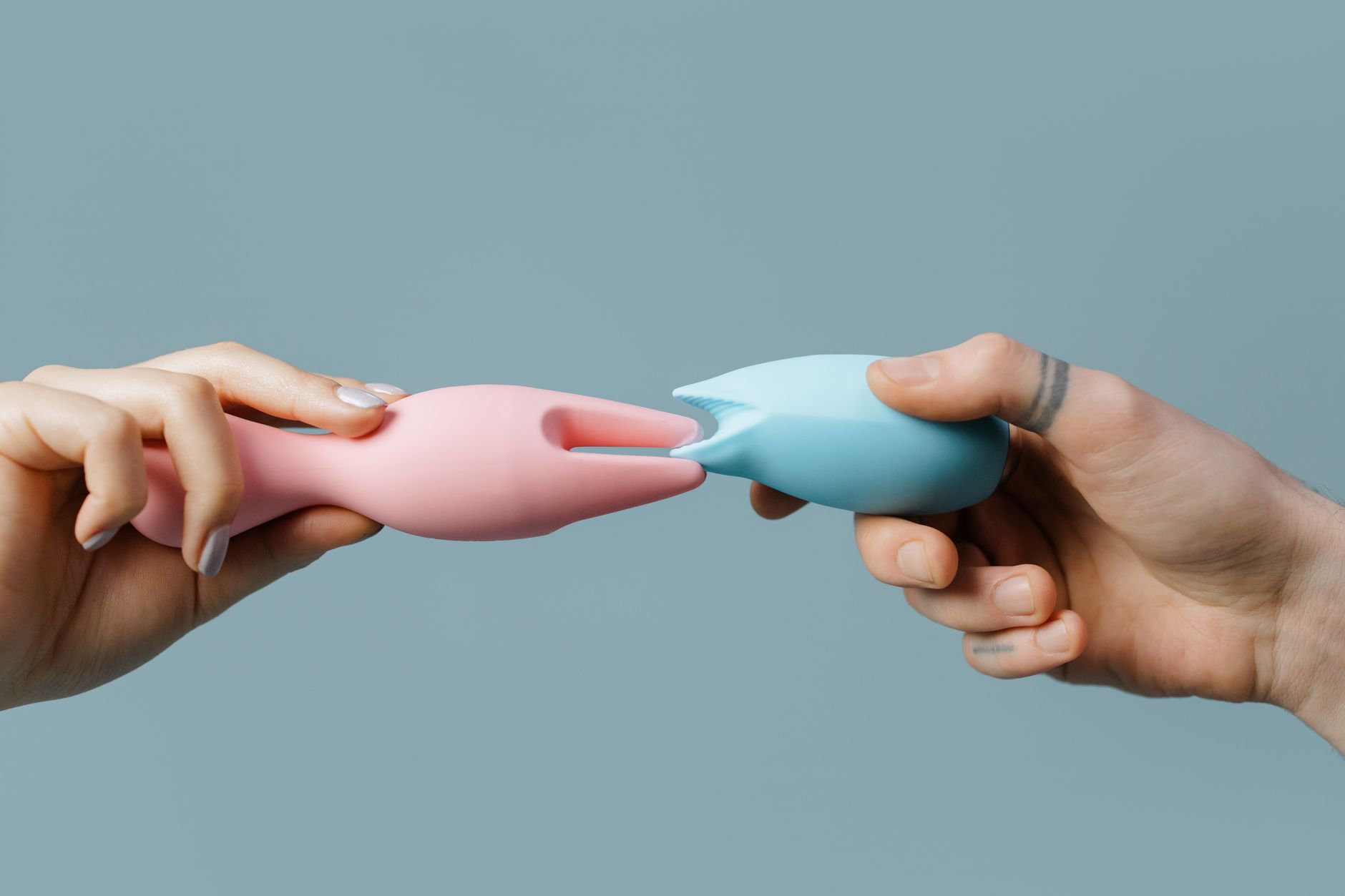
Photo by cottonbro studio on Pexels
The conversation that changes everything
A lot of people think admitting you need a lemon vibrator means admitting something is wrong. The opposite is true. It means you're honest about what your body actually needs and you're taking responsibility for it instead of performing for someone else.
That's confidence. That's self-knowledge. That's the opposite of the shame spiral that happens when you fake it or force it.
When you bring a lemon clitoral vibrator into partnered sex intentionally, you're saying: my pleasure matters enough to be on my actual timeline. And most partners, once they see how much better sex gets when you're actually relaxed and present, stop pushing for speed.
What if your partner resists the idea?
Resistance usually lands in a few categories. "It's not natural." "It feels like you're replacing me." "Sex should be faster." "I feel like you don't want me."
Here's the reframe for each:
Not natural? Glasses aren't natural either, but they help you see. The lemon vibrator helps you come. Same logic.
Replacing you? No. It's you taking responsibility for your own orgasm instead of asking your body to do the impossible on command.
Should be faster? Show them the research. It's not. And slower sex, where everyone is actually present instead of one person checking a timeline, is better.
Feels like rejection? The opposite. Letting someone be part of your genuine pleasure is the most intimate thing you can offer.
The long view
When you use a lemon vibrator to reset your nervous system and your partner learns to respect your timeline, something shifts. Sex stops being a performance and starts being an experience. You become more present. You orgasm more reliably. The pressure that was killing intimacy gets replaced with actual connection.
That's not a side effect. That's the entire point. Your pleasure matters. Your timeline is real. And you deserve to climax on your own terms, with full presence and zero rush.
FAQ
How long does it take for a lemon vibrator to help me climax faster solo? Most people see shifts within 2-3 weeks of regular solo use. You're not training your body to come faster, you're training it to relax enough to climax at all. Once the pressure is gone, pleasure gets easier. Speed follows naturally.
What if I still can't orgasm even with a lemon vibrator? If you're still struggling after 4 weeks of solo use, check three things: are you genuinely relaxed, or is performance pressure still there? Are you using enough lube and enough warm-up time? Are you on medication (like SSRIs) that affects arousal? If it's the third one, talk to your doctor. If it's one or two, dial back expectations and focus purely on sensation, not outcome.
Can I use a lemon clitoral vibrator during partnered sex if my partner feels threatened? Start the conversation before sex. "I want to feel good during sex, and using this helps me get there. Would you be open to trying it together?" If they say no, ask why. Usually it's fear or misunderstanding. Education helps. If they truly won't budge, that's about their insecurity, not about the vibrator. That's a deeper relationship conversation.
Does using a lemon vibrator mean I'll become dependent on it for orgasms? No. The Lem is a tool that helps you learn what your body actually needs. Once you know your timeline and your nervous system believes it's safe, you can climax in other ways too. The vibrator teaches your body that pleasure is possible. Then pleasure becomes possible in multiple contexts.
What if my partner wants to use the lemon vibrator on me, but I want to control the pace? That's totally fair to ask for. "I want to hold it and control the intensity. You can be involved in other ways." You might let them handle foreplay, or maintain penetration while you use the vibrator, or let them watch and direct. The key is you keep control of the actual stimulation.
How do I talk to my partner about this without making them feel bad? Lead with what you want, not what they're doing wrong. "I've realized my body needs about 25 minutes of clitoral stimulation to reach orgasm, and I'd love your help making that happen." Blame biology, not them. Invite them into the solution, don't exclude them. And remember: if they care about you, they'll care about your pleasure. This is information they need.
The actual path forward
Lemon vibrators exist partly because partnered sex, beautiful as it is, doesn't always deliver what one person needs. Add partner pressure to that gap, and pleasure becomes impossible. The solution isn't to sacrifice your body's reality to someone else's timeline. It's to get honest about what you actually need, own it, and invite your partner to be part of that truth instead of asking them to rush it away.
Your orgasm is yours. Your timeline is real. And a lemon clitoral vibrator can help you prove both of those things to yourself and to the person you're with.
Ready to reset your pleasure on your own terms? Reach out to us if you want guidance on finding the right vibrator for your needs.