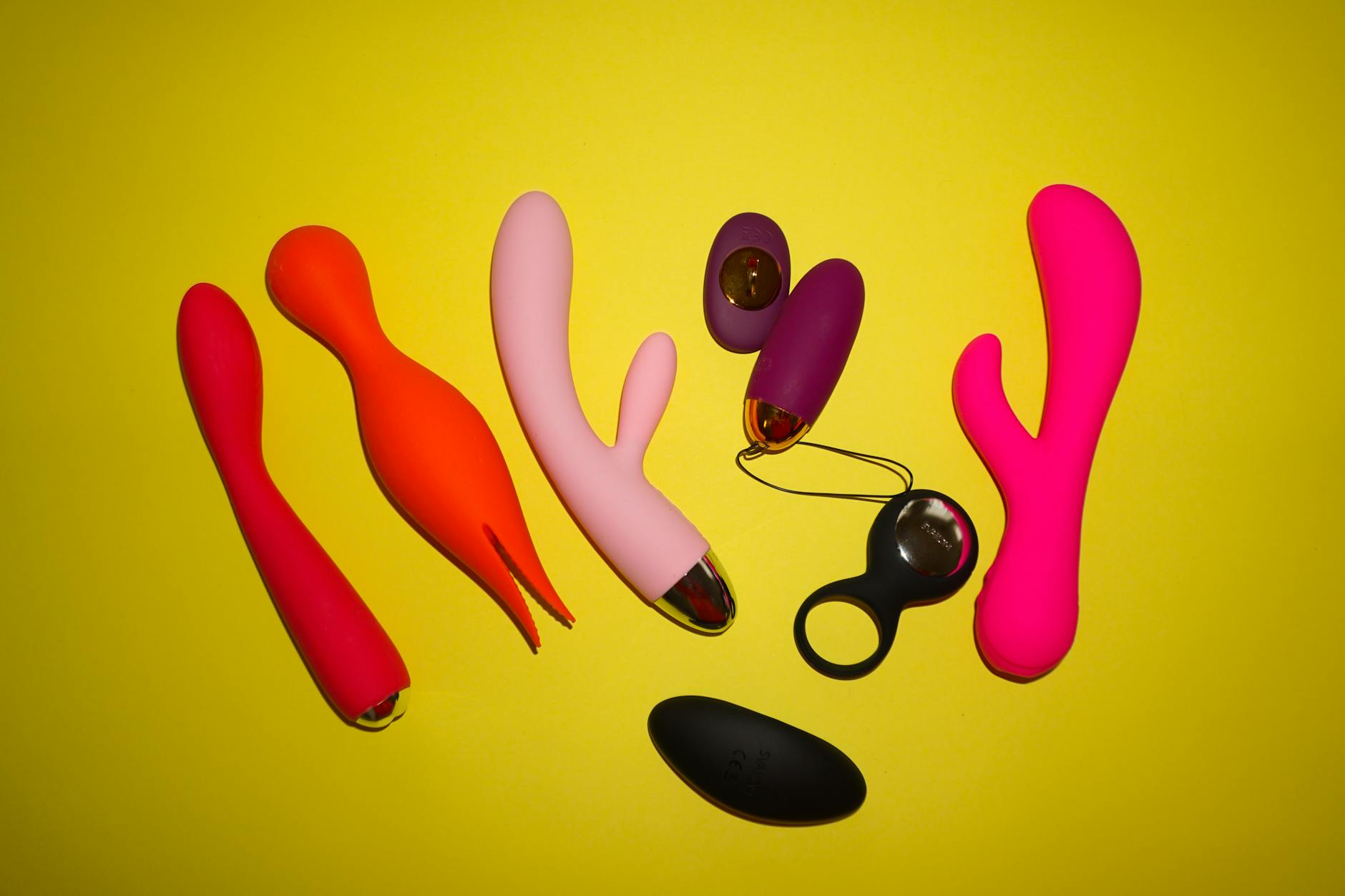
Here's what guilt actually does
Guilt doesn't make you virtuous. It doesn't make you a better partner or a better person. What it does is hijack your nervous system mid-pleasure, pull focus away from sensation, and create a feedback loop where you feel bad for feeling good. Then you feel bad about feeling bad. Then you stop trying.
That's not morality. That's just expensive self-sabotage.
I work with a lot of people who come to pleasure with a running monologue of apology. "I shouldn't be doing this, my partner might need me, I'm being selfish, I should be doing something productive." The pleasure never lands because the brain is too busy prosecuting the case against themselves.
Where the guilt actually comes from
It's rarely born from nowhere. Most of the time it's inherited. You grew up watching women put everyone else's needs first. You learned that your desire was inconvenient, that asking for time alone felt like rejection of your partner, that pleasure was something you earned after everyone else was taken care of. Maybe you were explicitly told that masturbation was wrong. Maybe it just lived in the air as an unsaid assumption.
Something else happens too. There's often a weird social rule embedded somewhere that says solo pleasure is a sign that something's wrong with your relationship. That if you're using a vibrator, you're either supplementing a deficit or being unfaithful to your partner's capability to satisfy you. Neither of those is real. Solo pleasure and partnered pleasure are completely separate experiences serving completely separate functions.
A lemon clitoral vibrator isn't a statement about your partner. It's a statement about you. It says: "My pleasure matters enough to prioritize. My body deserves attention. I'm not waiting for permission."
The permission problem
Here's the thing about guilt: it often comes dressed up as responsibility. You're not avoiding pleasure because you're selfish, you tell yourself. You're just being considerate. You're just not putting yourself first all the time. You're just recognizing that other people have needs too.
Yes. Other people do have needs. And so do you.
The people who love you are not counting how much time you spend on yourself and marking you down for it. Your partner is not secretly hoping you'll suppress your sexuality. Your kids don't need you less if you lock the door for 20 minutes and use lemon sexual toys designed for your pleasure.
What they need is for you to model that your own needs matter. That's not selfish. That's the baseline of healthy living.
When you prioritize your pleasure without guilt, you're teaching everyone around you that self-care isn't negotiable. That's not taking something from them. That's giving them permission to do the same thing.
How guilt blocks the physical experience
Your nervous system doesn't care about your thoughts. If your brain is firing guilt signals, your body doesn't fully relax into arousal. The vagus nerve stays slightly activated, ready to interrupt, ready to feel bad. Your clitoris won't respond the same way. You won't reach the same depth of orgasm. The whole experience flattens.
Then you use a lemon vibrator and it doesn't work the way you thought it would, so you add more guilt to the pile. "I can't even do this right." But the toy isn't the problem. The brain is.
That's why the physical work and the mental work have to happen together. You can have the best clitoral vibrator on the market, but if your nervous system is stuck in shame, nothing lands.
Rewiring the guilt response
This takes practice, but it's learnable. Here are the moves that actually work.
First. Name the specific guilt. Not "I feel bad," but "I feel bad because I think I should be doing laundry right now" or "I feel bad because my partner is downstairs and I'm worried they'll resent me." Specificity breaks the spell. A vague guilt is huge. A specific guilt is often tiny once you look at it.
Second. Question the rule. Is it actually true that you can't take 20 minutes for yourself while laundry sits? Is it actually true that your partner will resent you for wanting to feel good? You probably know the answer already. But naming the lie out loud changes it.
Third. Practice the redirect. When guilt pops up mid-session, don't try to power through. Pause. Breathe. Notice it. Then say something like "That's not true. I deserve this. My pleasure matters." It sounds simple because it is simple. But the nervous system responds to repetition and clarity.
Fourth. Set a boundary. Tell your partner you need 30 minutes alone. Not as a question. As a statement. "I'm taking some time for myself from 8 to 8:30. I need you to respect that." A partner worth keeping will respect that immediately.
If you don't have a partner, you still need this boundary. Lock the door. Silence your phone. The external protection helps the nervous system relax. You're literally telling your brain "this time is protected."
The nervous system work that makes pleasure possible
Guilt lives in the sympathetic nervous system, the fight-or-flight branch. Pleasure lives in the parasympathetic branch, the rest-and-digest space. You can't occupy both at the same time. So if you want to actually feel something when you're using lemon adult toys, you have to actively shift your nervous system state.
That starts before you touch yourself. Create a ritual that tells your body "this is safe time." Maybe it's dimming the lights. Maybe it's a specific song. Maybe it's lighting a candle. The content doesn't matter. The consistency does. Your nervous system learns what the cue means and starts pre-emptively downshifting.
When you settle into the session with a lem vibrator, you're not just using a toy. You're also practicing a skill: the ability to receive pleasure without apologizing for it. That's valuable in its own right.
Some people find it useful to have an actual phrase. "My pleasure is not selfish. I deserve this time. My body deserves attention." Repeat it until it stops feeling like a lie. It'll probably take dozens of times. That's normal.
What guilt masquerading as something else looks like
Guilt is sneaky. Sometimes it shows up as boredom. "I don't know why I'm not into this anymore." Sometimes it's numbness. "I can feel the vibration but I'm not really present." Sometimes it's performance pressure. "I should be having an amazing orgasm right now."
All of those are often guilt in disguise, because the real guilt made the experience feel unsafe to your body. So your body just checked out.
If you've been using a lemon clitoral vibrator for a while and it suddenly stops working the way it used to, check in with guilt first. Has something changed in how you feel about taking time for yourself? Has a partner comment stuck with you? Did you read something that made you question whether this was okay? The tool didn't break. The connection got blocked.
The relationship angle
I work with a lot of couples where one partner is using lemon sexual toys and the other isn't exactly enthusiastic about it. "It feels like you don't need me," some partners say. That's often guilt getting borrowed from someone else's insecurity.
Your pleasure doesn't diminish your partner's value. Actually, the opposite is usually true. People who feel entitled to their own pleasure tend to be better partners. They have better boundaries. They're less resentful. They're more present.
If you're in a relationship where you feel guilty about solo pleasure, that's worth examining. Not because you need permission. But because ongoing guilt in a relationship usually means there's something bigger that needs talking about. Maybe it's about feeling valued. Maybe it's about frequency mismatches. Maybe it's about unresolved anger.
A lemon vibrator isn't the solution to relationship problems. But claiming your right to pleasure without guilt is often the first step toward addressing them.
The practical reality
You get to have pleasure that's just for you. You get to use clitoral vibrators designed for your pleasure. You get to lock a door and spend time on sensation without apologizing for it. That's not a luxury. That's basic self-respect.
Every time you use a lem vibrator without guilt, you're telling your nervous system that pleasure is safe. You're also teaching your nervous system that you're worth protecting. Those are the same thing.
Start small if you need to. Five minutes. Ten minutes. Build the practice of taking time without the running apology track. Notice what changes when guilt gets out of the way. Most people find that the pleasure lands differently. Deeper. More present. More real.
That's not because the toy got better. It's because you did.
FAQ
What if my partner says solo pleasure means I don't love them?
That's insecurity talking, not truth. A partner who tries to control your solo pleasure by making you feel guilty about it is signaling something that probably needs professional help to untangle. You might consider bringing that to a couples counselor. In the meantime: your pleasure is yours. It has nothing to do with how much you love them.
Can I feel guilty about pleasure and still have good orgasms?
Sometimes, yes. But the orgasms will be less intense, less frequent, and less satisfying than they could be. Your nervous system is split between arousal and shame, so you're operating at partial capacity. The guilt doesn't have to completely kill sensation for it to make pleasure worse than it could be.
Is it normal to feel guilty about using a vibrator if I was raised religious?
Very normal. That messaging goes deep. It might help to know that plenty of religious people, religious counselors, and religious traditions have made peace with the fact that pleasure is part of being human. You don't have to reject your upbringing to claim your right to your own body. But you might need to sit with a therapist or counselor who understands both sexuality and spirituality.
How do I know if what I'm feeling is guilt or something else?
Guilt usually comes with specific thoughts: "I shouldn't be doing this." "I'm being selfish." "I should be somewhere else." "What if someone finds out?" If you hear that monologue in your head during pleasure, that's guilt. Other blocks feel different. Numbness feels like nothing. Boredom feels like disconnection. Guilt feels like judgment.
What if I feel guilty even after I give myself permission?
That's because guilt isn't purely logical. You can intellectually know that solo pleasure is fine and still feel bad about it, because the feeling comes from old wiring. Keep practicing the nervous system work. Keep redirecting. Keep repeating that your pleasure matters. It takes time, but it rewires.
Can using lemon clitoral vibrators help me get over the guilt?
Not directly. The vibrator is a tool. The rewiring happens in your mind and nervous system. But practicing pleasure without guilt, over and over, does eventually teach your body that it's safe. That's when the tool actually starts working the way it's designed to.