Let's talk about the thing nobody wants to say out loud
You're in a relationship. You love your partner. And sex has become almost impossible because you're angry at them.
Not angry in the moment. Angry underneath everything. The kind of angry that lives in your chest and makes your body close down the second they touch you. Resentment has a way of doing that. It doesn't just kill desire. It kills your ability to feel anything at all.
How resentment actually shuts down pleasure
Here's the neurobiology piece: arousal requires trust. Not just "I trust you won't hurt me" trust. I mean the deeper thing. Your nervous system has to believe it's safe enough to open. Resentment does the opposite. It tells your body there's a threat in the room. Not a physical threat necessarily, but an emotional one. Unresolved conflict. Words that landed wrong. Feeling unseen or unsupported. Your body responds by contracting.
When that happens, arousal becomes almost impossible. You might want to want sex. Your partner might be trying everything right. But your nervous system isn't buying it. The clitoris won't respond the way it normally does. Lubrication doesn't come. Orgasms feel miles away.
This is not a desire problem. This is a safety problem.
Why solo pleasure is actually the first repair
Here's what I see in my practice constantly: couples skip the individual work and go straight to "let's have sex" as the fix. That almost never works. Resentment doesn't dissolve because you're together. Sometimes it gets worse.
But something shifts when you give yourself permission to feel pleasure independently. Not as a rejection of your partner. As a reclamation of your own body.
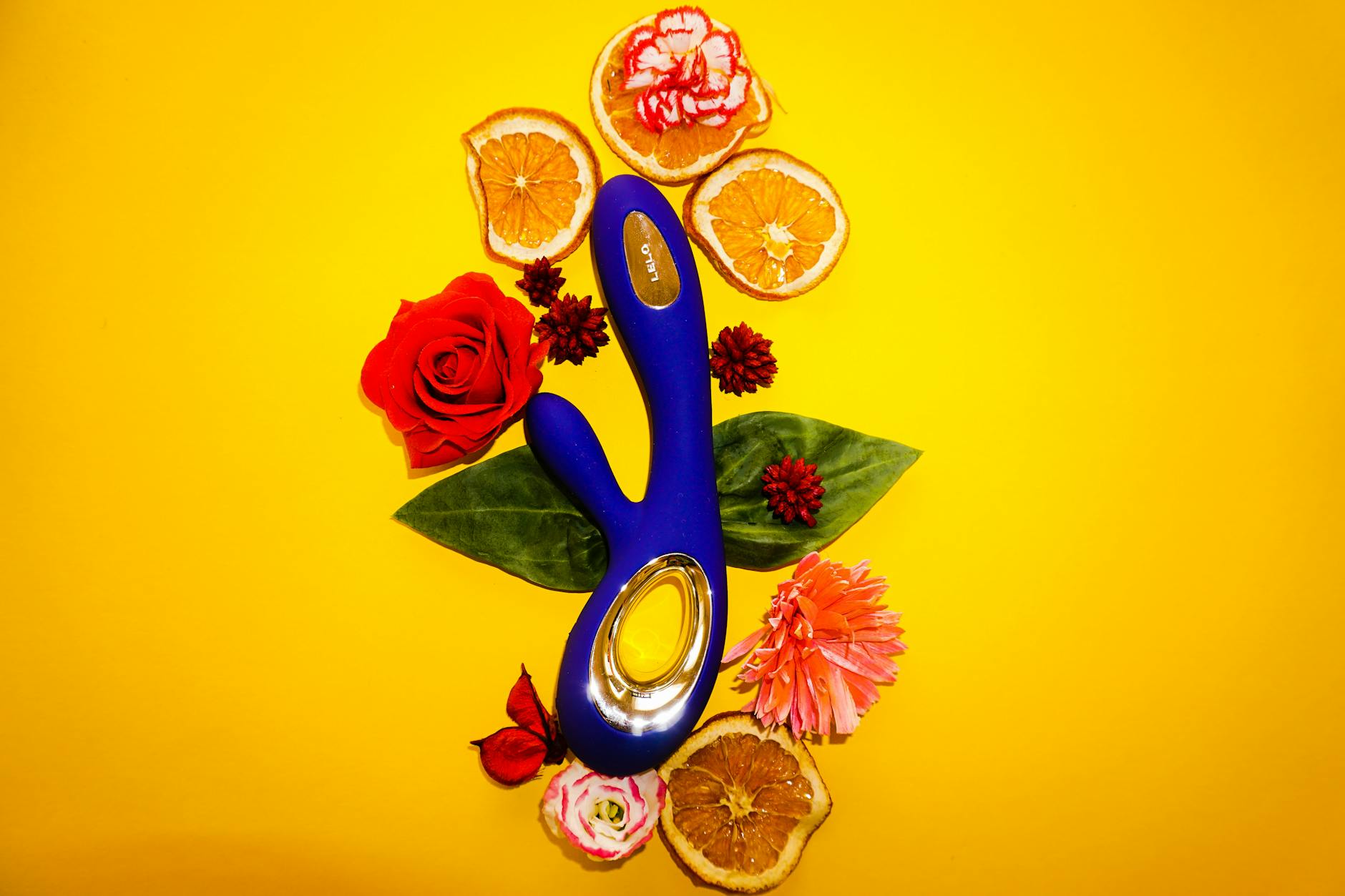
Using a lemon clitoral vibrator solo while you're working through resentment does something specific. It reminds your nervous system that pleasure is still available to you. That your body isn't permanently offline. That you can access sensation and release without needing your partner to be the source of it.
That's huge. Because right now, your body might be treating sex as "something that requires trust I don't have." Solo pleasure reframes it as "something I can access on my own terms."
The practical rhythm: how to start again
If you haven't touched yourself in months (or years, which I hear a lot), don't jump into the deep end. Your body has been saying no for a reason. Respect that.
Start with this:
Week one: presence without goal. Spend 10 minutes alone with a lemon vibrator on the lowest setting. Don't try to come. Don't expect anything. Just notice what your body is saying. Is there tightness? Release? Numbness? All of those are data.
Week two: slow escalation. Still lowest setting. Maybe 15 minutes. If something feels good, let yourself stay there. If it feels disconnected, that's fine too. You're gathering information, not performing.
Week three and beyond: what actually works for you. By now you might know: does direct clitoral stimulation feel like too much when you're carrying resentment? The suction design of lemon vibrators can actually help with that. The gentler, indirect pressure often feels more accessible when your nervous system is defended.
The psychological piece: what's actually happening
When you use a clitoral vibrator while you're in an emotionally disconnected phase, you're essentially telling your body something important: "Your pleasure doesn't depend on this relationship being perfect. It depends on you."
That's not selfish. That's actually what research on couples therapy shows us. Partners who maintain their own pleasure, their own sense of agency, often repair faster. Because they're not putting the entire weight of their healing on the relationship itself.
You're also gathering clarity. As you reconnect with your own arousal, you might realize something: "I want to work on this." Or you might realize: "This resentment is telling me something I need to listen to." Either way, you're making that decision from a place of fullness instead of depletion.
When your partner asks what you're doing
This gets messy fast. Some partners feel threatened by solo pleasure when resentment is already in the room. They interpret it as "she's pulling away more."
You can try: "I need to rebuild my own sense of pleasure right now. This isn't about you. It's about me remembering that my body is mine." If they can't hear that, that's information too.
Other partners actually feel relieved. One less pressure on them to "fix" the situation through sex. If your partner is in that camp, you might say: "I'm working on reconnecting with myself. When I feel more grounded, we can talk about us."
But let's be honest: if the resentment is deep, if the conflict is chronic, using a lemon vibrator isn't a substitute for actually dealing with the emotional stuff. Solo pleasure can create space for that conversation to happen. It can't replace it.
When to pause and get help
If you're using pleasure as avoidance (instead of as reconnection), that's worth noticing. If you're using solo pleasure specifically to avoid partnered sex indefinitely, that's a sign the resentment needs actual attention.
Therapy, honest conversation, or even a structured date night to actually talk about what's resentful. Not sex. Talking.
If the resentment doesn't budge after a few months of you working on your own pleasure and your partner being willing to engage, a couples therapist who understands both emotional intimacy and sexuality (not all do) can be transformative.
The slow return to connection
At some point, if you want to, you might notice that your body is beginning to open again. Not because the resentment is gone. Just because you've reminded yourself that pleasure exists. That your nervous system can shift from defensive to receptive.
When that happens, partnered sex might start to feel possible again. Not as a way to fix things. But as one part of rebuilding trust.
Some people find that reintroducing toys (like a lemon clitoral vibrator) into partnered sex actually helps. Because it reminds both of you: "This isn't about performance. This is about presence."
But that's the later chapter. Right now, if sex feels impossible because of resentment, your job is simpler. It's to remember that your body is still capable of pleasure. That you're still deserving of it. And that reconnecting with yourself might be the only bridge back to your partner.
People also ask
Why does resentment make orgasms harder to reach?
Resent ment activates your nervous system's defensive response. Your body literally cannot access full arousal when it perceives an emotional threat. The parasympathetic nervous system (the one that allows relaxation and pleasure) gets overridden by the sympathetic system (fight, flight, or freeze). You're essentially stuck in a low-level survival mode where pleasure feels unsafe or impossible.
Can using a vibrator help rebuild desire for my partner?
It can help create the conditions for desire to return, but it's not a direct line. Solo pleasure reconnects you with your own capacity for sensation and release. That foundation sometimes makes it easier to feel safe opening up to a partner again. But the actual reconnection with your partner requires them to be willing to engage with the resentment too. A vibrator can't fix a relationship problem.
Is it normal to feel nothing when I try solo pleasure after months of resentment?
Completely normal. Resentment causes emotional numbing as a self-protective mechanism. Your body is defending itself. Numbness is not a sign that you're broken. It's a sign that your nervous system is overwhelmed. With time, patience, and consistent solo practice, sensation often returns. The key is not forcing it.
How do I talk to my partner about using a lemon clitoral vibrator while we work through resentment?
Start with vulnerability, not defensiveness. Try: "I need some time to reconnect with my own body. I'm not feeling safe or open right now, and I think this will help me work toward that." Some partners hear this as threatening. If yours does, that's a conversation worth having. Why does your pleasure outside the relationship feel threatening to them?
What if my partner thinks I'm pulling away by focusing on solo pleasure?
They might. But using solo pleasure isn't pulling away. It's actually the prerequisite for genuine reconnection. You can't build real intimacy from a place of numbness or resentment. You have to start with yourself. If your partner can understand that this is about you rebuilding capacity, not rejecting them, you're in a better position. If they can't, couples therapy might help translate.
When should resentment make me question whether I want to stay?
That's a much bigger question than a vibrator can answer. But here's the baseline: if resentment is so deep that you can't imagine opening again, and your partner is unwilling to engage with why you're resentful, that's worth exploring with a therapist. Pleasure and connection aren't frivolous. They're indicators of whether a relationship can actually work for you.
Moving forward
Resent ment is real. It's not something that dissolves because you decide to have sex. But your body isn't permanently offline. Reclaiming your own pleasure, on your own terms, is often the first step toward deciding what you actually want next, whether that's reconnection or something different entirely.
Your pleasure matters. Even (especially) when your relationship is a mess. Start there.