Let's start with the conversation, not the toy
Most couples skip the hardest part. They buy a toy, wait for the "right moment," and then it gets awkward because the whole thing feels unplanned. Here's what actually works: talk about it before anything arrives at your door. Not in bed. Not when you're already touching each other. Over coffee, in the car, whenever you'd normally have a real conversation.
The conversation isn't about convincing anyone. It's about clarity. Does your partner know you want to try something? Do they know why? Have you actually heard what they think, or are you still guessing?
Why the resistance shows up (and it's not what you think)
When someone hesitates about toys in partnered sex, it's rarely about the toy itself. I've worked with couples for decades, and the resistance almost always maps to one of three fears: inadequacy, loss of control, or feeling replaced. None of those fears are about vibration patterns.
A partner might worry: "If she needs a toy, am I not enough?" That's actually a really vulnerable thing to be scared of, and it deserves a real answer. The answer isn't "of course you're enough." The answer is "A vibrator does one thing beautifully: sustained suction or vibration at the exact frequency that works for my body. You do a thousand other things. This isn't either-or."
Similarly, some partners feel like toys mean loss of control or spontaneity. That's worth naming too. You can build toys into your rhythm in ways that feel collaborative, not intrusive.
Timing matters more than you'd think
Don't introduce a toy during a session where something is already working. That's the equivalent of interrupting a conversation to add a new person. Start with a moment that's already slower, maybe playful rather than urgent.
Also, don't wait until you're already in motion. The best time is when you're touching but not deep in arousal yet. This is when introducing something feels like part of the flow, not a pivot.
The setup that actually feels natural
Here's a rhythm that works for most couples: you're together, things are building, and before you reach the point where you'd normally be moving toward certain kinds of touch, you pause slightly. Not awkwardly. Just enough to say something like, "I want to try something."
Then you hand them the toy, or you hand it to yourself. The key is that your partner isn't watching from the sidelines. They're part of this. They might hold it, or they might be inside you while you use it on yourself, or you might use it on them. The Lemon Clit Vibrator works beautifully for external stimulation during partnered penetration because the suction design doesn't require the intensity of direct pressure that older toys do.
Start at a lower setting. Pattern 1 or 2. You're not trying to finish. You're trying to show your partner what this feels like and where it works on your body. This takes the performance pressure off.
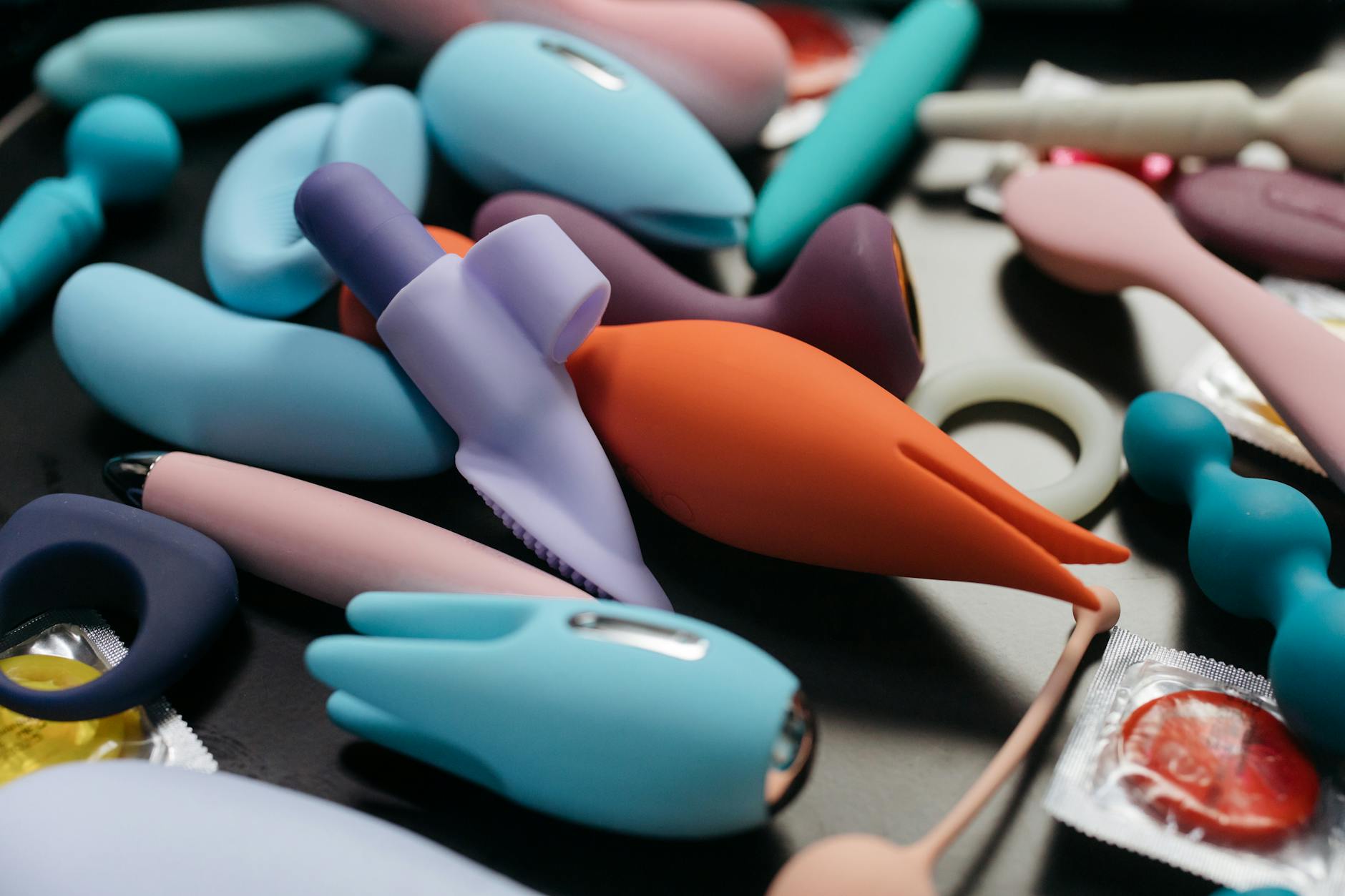
Photo by cottonbro studio on Pexels
What to actually say (word for word)
Don't start with "I want to use a toy during sex." That sounds like a negotiation. Try instead:
"I've been thinking about trying something that might feel really good. Can we experiment together?" That opens a conversation instead of presenting a decision.
If they ask why, be honest. "Sometimes it's hard for me to finish with just penetration, and I want to experience that together instead of faking it." Or: "I want to feel what sustained stimulation feels like while you're inside me." Those are specific, vulnerable, and about connection, not complaint.
If they're hesitant, ask what's making them uncomfortable. Really listen. Don't jump to reassurance. Reassurance feels like you're trying to talk them into something. Listening feels like you actually care about their experience too.
Managing the brain stuff during the act
Here's what happens: you introduce the toy, and your partner watches you respond to it. Their brain might immediately go to "I'm being replaced" or "I'm not doing enough." That's normal. It's also usually untrue, but your partner's nervous system doesn't know that yet.
One simple thing that helps: keep touching them. If your partner is inside you and you're using a toy on your clitoris, stay connected to their body. Touch their chest, their face, their arms. Not frantically. Just enough that you're still present with them while you're also feeling what the toy does.
If your partner is watching you touch yourself with the toy, talk during it. Not a lot. Just enough to pull them into the experience. "This feels so good," or "I can feel you," or literally anything that says "you're here and part of this." Silence can feel like a signal that they're not welcome.
The second time is easier than you think
Most couples report that the first time is the most self-conscious. You're both hyperaware. Second time, your nervous system already knows nothing bad happened. You can be more present.
So don't put pressure on that first experience to be perfect. It doesn't need to lead to orgasm. It doesn't need to be the hottest thing you've ever done. It just needs to happen without judgment.
When to bring it up afterward
Don't immediately ask "did you like that?" That puts your partner on the spot. Instead, let a little time pass. Then, in a normal conversation, mention something you noticed: "That felt different having you inside me while I was using the vibrator." That's a statement, not a question. It opens the door for them to share what they felt without pressure.
If they didn't love it, that's information too. Ask what felt off. Was it the sensation, the timing, the position? Those are all solvable problems. Lemon sexual toys work at different intensities and patterns. You can adjust.
Where this usually gets smoother
After a few times, most couples find a rhythm. Maybe you use the toy every time, or maybe only sometimes. Maybe your partner holds it for you, or maybe you do. Maybe it works best during a certain kind of touch.
What changes is that it stops feeling like an experiment. It becomes part of your sexual language. A tool that your body knows how to use and your partner understands contributes to your pleasure.
If your partner really resists
Sometimes someone says no, and they mean it. That's a boundary, and it deserves respect. But it's also worth exploring separately, away from the bedroom.
Ask: "What would need to be true for you to be open to this?" Maybe they need more time. Maybe they need more reassurance about your connection. Maybe they want to start with something less intense, like a simple vibrator designed more for couples use. Maybe they're willing to try solo first and see how they feel.
If the answer is truly "never," then you have a real choice to make about what you're willing to accept in your sex life. That's a bigger conversation, and it's worth having with honesty.
The clitoral vibrator as a bridge
Lemon vibrators specifically are good for this moment because they're not intimidating. They're small, the design is elegant, and they work through suction rather than aggressive vibration. That often makes partners feel less replaced and more like they're exploring something together.
The key is that you're not asking your partner to watch you abandon them. You're asking them to watch you take yourself seriously. That's actually a pretty intimate thing to invite someone into.
FAQ
How do I know if my partner will be open to toys in partnered sex?
You ask. Directly. "I've been thinking about trying a toy together. How would you feel about that?" Yes, it's vulnerable. Yes, you might not like the answer. But guessing is way worse. At least you'll know what you're actually working with.
Should I introduce the toy idea before or after I buy it?
Before. Absolutely before. Surprising someone with a toy is a high-risk move because you're not just introducing a physical object, you're introducing the assumption that they've already agreed to something. Talk first, buy second.
What if my partner wants to use the toy on me but I'm embarrassed?
That embarrassment usually comes from handing over control. You're watching someone else determine the sensation. One option: keep your hand on theirs so you can guide the pressure and movement. You're still in control, but you're letting them be part of it. Another option: start with you holding it while they watch. Less intensity on the vulnerability meter.
Can we use a toy if we rarely have time for sex?
Actually, toys can help here. If time is limited, your body doesn't have the luxury of a long warm-up. A toy helps you get there faster, which means you get to actually enjoy the time you do have. That's not cheating the experience. That's being practical about the life you actually live.
Should I use a toy every time, or just sometimes?
Neither is right. Whatever feels good to both of you is right. Some couples use toys every session. Some use them once a month. Some use them for a while and then stop. Sexual rhythms change. What matters is that you're making the choice together, not falling into a pattern.
What if we try the toy and my partner feels inadequate afterward?
Talk about it directly. "I noticed something shifted after we used the toy. What's going on?" Listen without defending. Don't jump to reassurance. Just sit with what they're feeling. Often, that's enough. Your partner needs to know you see them feeling vulnerable, not just that you're trying to fix it. That presence matters more than any perfect thing to say.