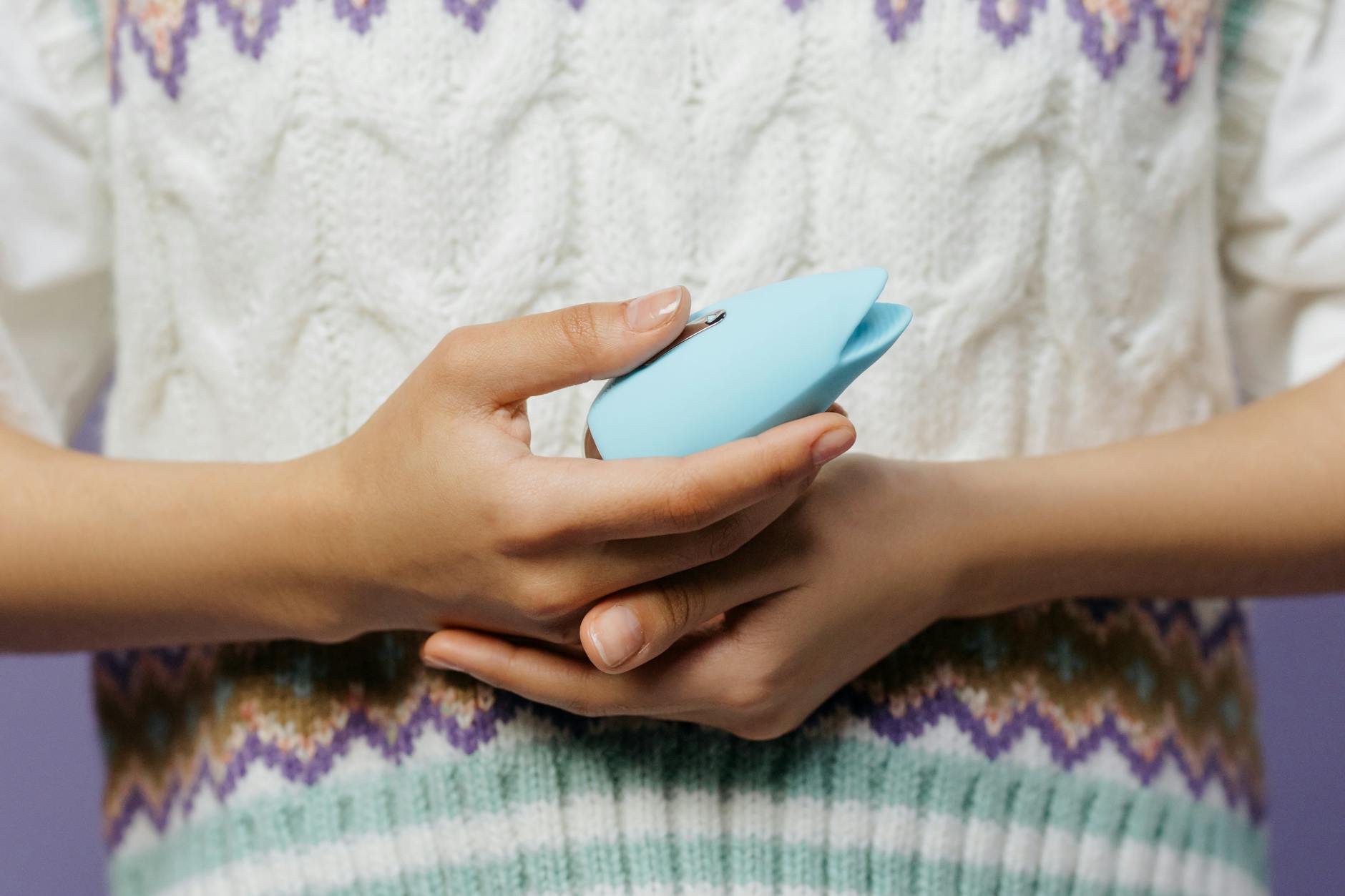
How to Use Lemon Vibrators When Clitoral Sensitivity Varies With Your Cycle
Let's be real: your clitoris doesn't feel the same throughout the month. Some days it wants aggressive pressure. Other days, light touch feels like sandpaper. Most people don't talk about this because it's awkward to explain, but the science is straightforward. Hormone fluctuations change how your nerve endings respond to stimulation. And if you're using the wrong technique at the wrong time of your cycle, you're fighting your own biology.
The good news? Once you map your sensitivity pattern, you can adjust how you use your lemon vibrator to match each phase. Suction-based toys like the Lemon Clit Vibrator are particularly useful for this because they're gentler and more adaptable than traditional vibrators.
How Your Cycle Actually Changes Clitoral Sensation
Your clitoris swells and softens predictably across your menstrual cycle. During the follicular phase (the first two weeks after your period starts), estrogen rises. This increases blood flow to your genitals and makes the clitoral tissue more engorged. Sensations feel sharper, more direct. You might crave intensity.
Then ovulation happens. For about 24 to 48 hours, you'll likely hit peak sensitivity. Your clitoris is at maximum engorgement, nerve sensitivity is highest, and orgasms often feel more intense. This is your body's evolutionary pull toward sex when you're most fertile.
After ovulation, progesterone rises. The clitoral engorgement deflates slightly. Sensitivity dulls. Around day 21 to 28, you're in your luteal phase. Many people describe clitoral touch during this time as either overly intense (pressure hurts more) or underwhelming (nothing feels like enough). Both are common. Both are hormonal.
Then your period arrives and resets the cycle.
Why Traditional Vibrators Struggle With Cycle Sensitivity
Most vibrators deliver consistent, intense vibration. That works fine when your clitoris is in the follicular phase and wants stimulation. But during your luteal phase or the days after ovulation when sensitivity is erratic, vibration becomes either overwhelming or boring.
You end up chasing the feeling, switching intensity levels constantly, or putting the toy down entirely. That's not a you problem. It's a tool problem.
The Lemon Clit Vibrator uses suction instead of traditional vibration. Suction creates a seal that feels more like sustained pressure combined with subtle pulsing, rather than aggressive buzz. This is valuable during all phases, but it's a game-changer during high-sensitivity days. You get stimulation without the raw intensity.
Mapping Your Sensitive Days: The Self-Assessment Phase
Before you adjust your technique, you need to know what your cycle actually looks like. This takes one or two cycles but it's essential information.
Start tracking three things daily: your period status (days 1-28 or however your cycle runs), how your clitoris feels to light touch (scale of 1 to 10), and how it responds to firmer pressure. Use your hands first. Get baseline data before adding toys.
You'll start to see the pattern. For most people: days 1-7 (period and early follicular) show moderate sensitivity. Days 8-14 (late follicular into ovulation) show high sensitivity. Days 15-21 (post-ovulation) show erratic sensitivity, often spiking in the middle or dipping entirely. Days 22-28 (luteal phase) show either dull response or hypersensitivity depending on your individual hormones.
This map becomes your user manual for the month.
Using Lemon Vibrators During High-Sensitivity Phases
Days 8-15 are your peak arousal window. If you're using a lemon vibrator during this phase, you can be aggressive without consequences. Start on a higher intensity pattern because your tissue can handle it. Move directly to your clitoris without extended warm-up. Sessions can be shorter because arousal builds faster.
Many people use the Lemon Clit Vibrator on settings 4-6 during this window and orgasm in five to eight minutes. Some prefer pattern variation (alternating between steady and pulsing) because sensitivity is high enough to notice complexity.
Partner play also works better during this phase. Your arousal is naturally higher, which means you're more likely to want external stimulation and less likely to feel self-conscious about intensity.
Using Lemon Vibrators During Low or Erratic Sensitivity
Days 16-28 are trickier. Your sensitivity isn't gone, it's different. Honor that difference.
Start with the lowest intensity setting, even if you usually use higher. Let your body tell you if you need to go up. Many people find that starting gentle and building actually creates more pleasure during this phase than diving straight into high intensity.
Warm up for longer. Fifteen to twenty minutes of foreplay, partner touch, or manual stimulation before bringing in the lemon vibrator makes a real difference. Your tissue needs more time to prepare, and your brain needs more mental arousal to compensate for the lower physical response.
Use sustained pressure patterns rather than complex pulsing. The lemon vibrator's suction function works better than traditional vibration here because it focuses stimulation rather than scattering it. You're not chasing a feeling, you're settling into one.
Expect longer sessions. Five to eight minutes might not cut it. Plan for 15-25 minutes if you're aiming for orgasm. That's normal. That's not broken.
What Changes During Your Period
Days 1-4 are usually moderate sensitivity. Your clitoris is softer from menstruation, but not numb. Orgasms feel slightly different, sometimes more diffuse than pointed. Some people find they orgasm more easily during their period because pelvic pressure from the cycle itself adds sensation. Others find orgasms uncomfortable and skip sex entirely. Both are fine.
If you use a lemon vibrator during your period, keep it moderate. Avoid the highest settings. The laxity of your tissues during menstruation can make intense stimulation feel bruising rather than good. Use your lowest comfortable setting and extend warm-up time.
Maintaining your lemon vibrator during your period is important. Rinse immediately after use and allow to air dry fully. Blood can't damage silicone, but moisture sitting on the toy creates conditions for bacterial growth.
The Partner Communication Angle
If you share sex with a partner, cycle-synced pleasure changes the script. Your partner can't just repeat what worked last week. What got you to orgasm in five minutes during ovulation might not work at all during your luteal phase.
The simplest solution: tell your partner where you are in your cycle before sex. "I'm in my luteal phase right now, so I'll need more time and lower intensity." That's not a rejection or a complaint. It's information. A partner who understands this can adjust their pace, extend foreplay, and set realistic expectations. That creates better sex for both of you.
This is also where toys become assets rather than threats. A lemon vibrator takes pressure off your partner to deliver the exact right sensation, because you're using a tool that adapts to your body. Your partner can focus on connection while the toy handles precision.
Adjusting Technique Across Patterns and Settings
The Lemon Clit Vibrator has multiple intensity levels and pattern options. Use them like you'd use gears on a bike.
During high-sensitivity windows, experiment with the faster patterns and higher intensities. You might discover that pattern 5 at full intensity hits in ways pattern 3 doesn't during your fertile days. Write down what works so you can come back to it.
During low-sensitivity windows, stick to patterns 1-3 and intensities 3-5. The sustained, slower patterns often feel better because they give your nervous system time to register the sensation without overwhelming you.
Don't assume one setting works year-round. Your tool should flex with your body, not the reverse.
When to See a Doctor About Sensitivity Changes
Hormonal cycle variation is normal. Pain during any phase is not.
If clitoral touch causes sharp pain during your high-sensitivity phases (not just tenderness, actual pain), that's worth mentioning to a gynecologist. It can indicate hormonal imbalances or inflammation that's treatable.
If your sensitivity completely flattens during your luteal phase and doesn't return, that's also worth investigating. It can signal hormonal insufficiency or early perimenopause, both of which have solutions.
Cycle tracking over two to three months helps you bring real data to that conversation instead of vague descriptions. Doctors take pattern-based information seriously.
FAQ: Cycle-Synced Pleasure
Can I use a lemon vibrator safely every day of my cycle?
Yes. There's nothing unsafe about daily use across all cycle phases. What changes is intensity and duration, not whether you do it. If you're using higher intensity during your high-sensitivity window and lower intensity during your luteal phase, you're already self-regulating. Your body sends clear feedback about what works.
Why does my orgasm feel different during ovulation compared to my period?
Two hormones: estrogen and progesterone. During ovulation, estrogen is peaked and progesterone is low. Your clitoris is at maximum blood engorgement, which means nerve sensation is heightened and orgasms tend to feel more localized and intense. During menstruation, progesterone is also dropping but estrogen is at its lowest. Your clitoris is less engorged, so sensations feel more diffuse and sometimes shallower. Neither is better. They're just different expressions of your body's natural rhythm.
Is it normal for my clitoris to feel almost numb in my luteal phase?
Yes, this is called relative hyposensitivity and it's hormonal, not pathological. Progesterone dampens nerve sensitivity and reduces blood flow to genital tissue. Combine that with lower estrogen and your clitoris literally has less stimulation reaching the nerve endings. This is why longer warm-up and gentler intensity work better during this phase. You're not broken, you're just working with less baseline sensation to start with.
Does using a lemon vibrator make me less sensitive to partner touch?
No. The fear that toys "desensitize" you is a myth. Your clitoral sensitivity is controlled by hormones, not by toy use. You can't masturbate your way to numbness. If you feel less responsive to partner touch during certain cycle phases, it's the hormone profile of that phase, not the tool you're using.
Should I avoid sex during my low-sensitivity phase?
Not unless you want to. Low sensitivity doesn't mean low pleasure. It means different pleasure. Some people find that slow, extended sessions during their luteal phase feel more emotionally intimate even if orgasm takes longer. Others find that having sex less frequently during their low-sensitivity window and ramping up during their high-sensitivity window works better. There's no should here. Your preference matters more than the calendar.
Can hormonal birth control change how lemon vibrators feel?
Yes, absolutely. Hormonal contraceptives flatten your natural cycle, so you won't get the same sensitivity shifts across the month. Some people on hormonal birth control feel consistently lower clitoral sensitivity because the steady hormone dose creates a persistent luteal-phase-like state. Others feel consistently high sensitivity. Some feel no change at all. It's individual. If you're on hormonal birth control and wondering why your usual technique isn't working, consider whether your hormone profile has shifted and adjust intensity accordingly.
Using a lemon vibrator means adapting to your body as it actually is, not fighting against it. Your cycle is a feature, not a bug. The pleasure payoff is worth learning the map.
Start Tracking, Then Adjust
One cycle of tracking takes discipline but pays back immediately. You'll stop wondering why something that felt amazing last month feels wrong today. You'll stop blaming the toy or yourself. You'll start understanding your body as a dynamic system that changes, and you'll have the tool to work with those changes instead of against them.
If you're curious about learning more about how your body responds to pleasure across different life phases, check out our guide on rebuilding arousal after hormonal shifts. And if you're navigating sensitivity changes with a partner, the post on exploring partnered play after years solo covers communication strategies that work across different arousal timelines.
Your cycle isn't a problem to solve. It's information to use. Your pleasure deserves that level of attention.
Questions about how the Lemon Clit Vibrator works with your specific cycle? Get in touch.