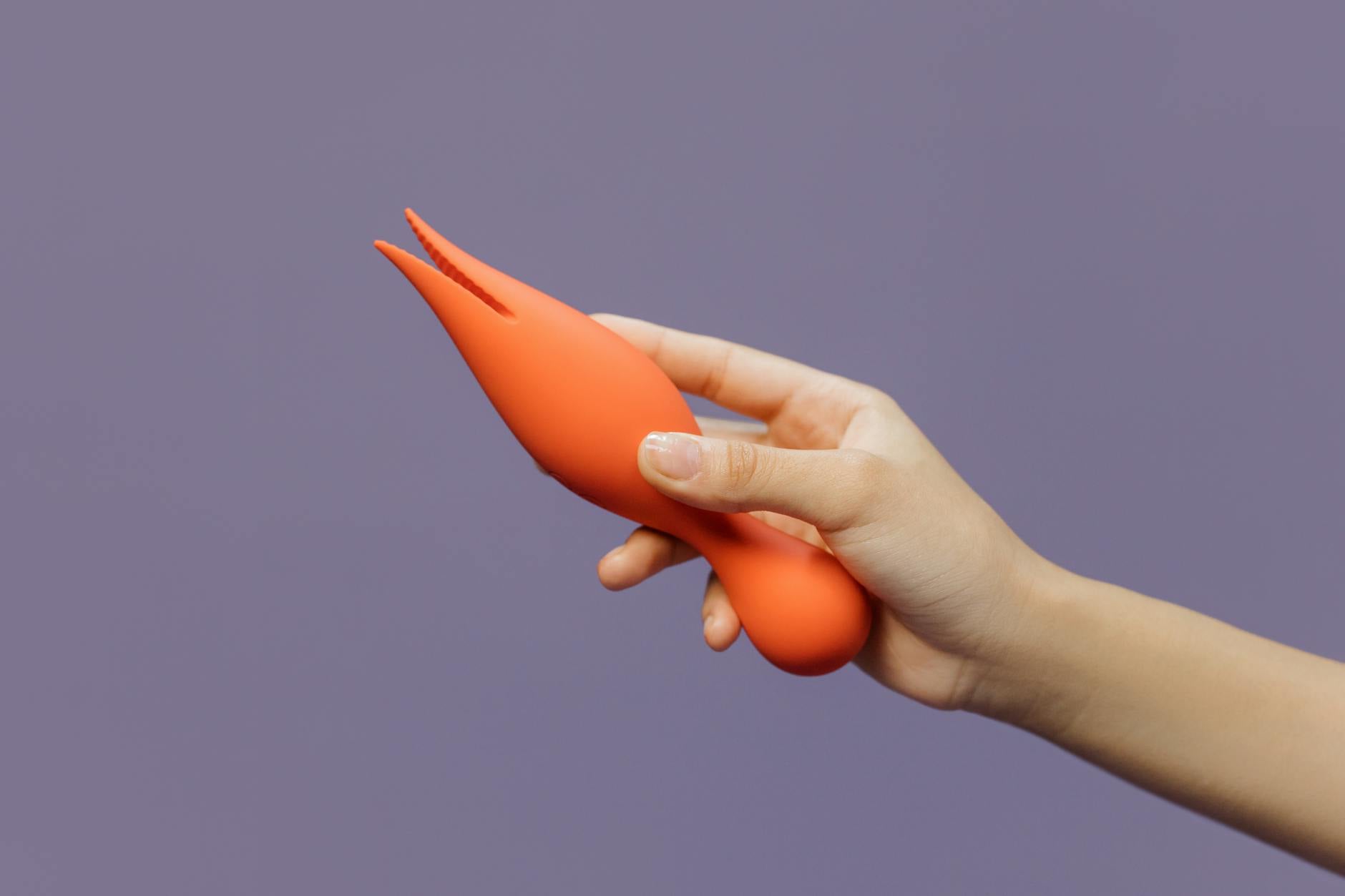
Let's talk about what happened to your sensation
Desensitization is real, and it's not a personal failure. It happens when the same stimulus repeated over time stops triggering the same neurological response. Your clitoris has roughly 8,000 nerve endings, and when they've been receiving the same type of stimulation for months or years, they essentially stop paying attention.
This is especially common if you've been using numbing lubes, relying on one vibration pattern exclusively, or using high-intensity vibrators for extended periods. Your nervous system adapts. The sensation that once felt electric becomes muted. Orgasms become harder to reach, feel less intense, or disappear entirely.
Here's what matters: this is reversible. It takes intention and patience, but your sensitivity can return.
How numbing lubes create the problem
Numbing lubes work by suppressing nerve signals temporarily, which can feel good in the moment, especially if you're dealing with sensitivity or pain. But here's the catch. When you use them regularly, your clitoris begins to expect and adapt to that reduced sensation. Over weeks or months, your baseline perception gets lower. Even when you stop using numbing lube, your nerve endings have essentially recalibrated downward.
The same applies to vibration intensity. High-frequency vibrators feel amazing at first, but they also train your nervous system to expect that level of stimulation. Lower intensities start to feel like nothing. You chase increasingly intense sensations, and the cycle deepens.
Both of these patterns create a kind of sensory debt that you have to actively repay.
Why air-suction works differently
Lemon vibrators use air-suction stimulation, which operates on a completely different mechanical principle than traditional vibration. Instead of oscillating against your clitoris, suction creates a gentle seal and rhythm that stimulates the entire clitoral body, not just the surface.
This matters because your clitoris is roughly 90% internal. Most vibrators are stimulating maybe 10% of the structure. Suction reaches deeper nerve pathways that numbing lubes and intense vibration may have left less engaged. It's like waking up a different part of your nervous system.
The suction sensation also feels qualitatively distinct. It's not vibration. Your brain recognizes it as novel stimulation, which itself can break the desensitization cycle. Novelty is one of the most powerful tools for resensitizing.
The reset protocol that actually works
Recovering sensation requires a deliberate pause and restart. Here's how I recommend approaching it with lemon clitoral vibrators.
Week 1-2: Lower intensity only. Start at setting 1 or 2 on your Lemon vibrator. This feels almost too subtle at first, and that's exactly the point. You're retraining your nervous system to notice gentler input. Use it solo for 15-20 minutes without pressure to orgasm. The goal is sensation awareness, not climax.
Week 3-4: Introduce variation. Alternate between two or three different intensity settings within a single session. Dwell on each for three to five minutes. This unpredictability signals your nervous system that engagement is happening, and sensitivity begins to return.
Week 5 onwards: Build slowly. Only when orgasms start returning naturally should you gradually increase intensity. Even then, rotate between lower and moderate settings. Aim for 70% of sessions on lower intensity, 30% exploring higher.
During this entire reset, avoid numbing lubes and traditional vibrators entirely. Water-based lubricant only. No exceptions.
What's happening in your nervous system
When you stop flooding your clitoris with intense or numbing stimulation, several neurological processes begin almost immediately. Within days, nerve sensitivity starts to creep back up. Within weeks, your baseline perception shifts. By eight to twelve weeks of consistent lower-intensity stimulation, most people report a significant return of sensation.
This isn't magic. It's neuroplasticity. Your nervous system is remarkably adaptable. It learns fast, and it unlearns fast too, as long as you're giving it clear new input.
One thing to know: the first orgasms that return often feel different from what you remember. They might be smaller, more localized, or take longer to build. That's normal. Your nervous system is relearning its own language. Within another four to six weeks, intensity and frequency typically normalize.
The patience piece, which is actually crucial
Desensitization recovery is the one area where I see people sabotage themselves most often. By week three, when sensation is starting to return but orgasms still feel distant, the temptation is massive to crank up the intensity or go back to numbing lubes. I've had dozens of clients tell me they lasted two weeks and then gave up.
Don't do that. The discomfort of slow progress is temporary. The reward of full sensation returning is permanent.
If you're partnered, let your partner know what you're doing and why. This isn't about anything being wrong with them or the relationship. It's a body reset, the same way someone might take a break from alcohol or caffeine. Frame it as a project you're undertaking for yourself, and ask them to be patient while you're in the recovery phase.
When to use Lemon vibrators in your reset
Use your Lemon clitoral vibrator as your primary tool during resensitization. The air-suction mechanism is ideal because it's gentle enough to rebuild baseline sensitivity without the intensity trap that traditional vibrators create. Solo sessions work best for the first month, when the goal is purely sensation awareness.
Once orgasms are returning and you're in weeks five or six, Lemon vibrators also integrate beautifully into partnered play. The sensation is distinct enough that a partner can use one during foreplay or penetration in ways that feel collaborative rather than replacements for their touch.
Checking in with yourself
At week four, pause and assess. Can you feel the suction more than you could in week one? Are orgasms happening, even if they're small? Is pleasure returning in any form? If yes, you're on track. If you're still feeling completely numb, talk to your GP. Persistent desensitization can sometimes signal hormonal issues, medication side effects, or pelvic floor dysfunction. Don't assume it's purely behavioral.
Most of the time, it's the behavioral pattern responding to the reset. But medical backup is worth checking if you hit a wall.
The long game
Once you've recovered full sensation, the maintenance approach changes slightly. You don't have to stay on low intensity forever. But rotating between lower, moderate, and higher settings prevents that creep back toward desensitization. Mix Lemon vibrators with manual touch. Vary your routine. Introduce new sensations periodically.
Your clitoris is curious. It wants novelty and variation. Give it that, and you'll maintain sensitivity indefinitely.
FAQ
How long does it take to recover sensation after numbing lubes?
Most people notice returns within two to four weeks of stopping numbing lubes and switching to gentler stimulation. Significant, noticeable recovery typically happens by eight to twelve weeks. Full baseline restoration can take four to six months depending on how long you were using numbing products. Patience is the main variable.
Can I use traditional vibrators while I'm recovering, or should I stick only to Lemon vibrators?
During the first month of reset, stick to Lemon vibrators or nothing else. Traditional vibrators, especially high-intensity ones, can reinforce the desensitization pattern. Once sensation is returning in weeks five and six, occasional traditional vibrator use is fine, but keep Lemon vibrators as your primary tool. Think of it as retraining your nervous system's default language.
What if I'm using antidepressants that cause numbness? Will this protocol still work?
Partially, but not fully. Many SSRIs reduce genital sensation as a side effect. The reset protocol absolutely helps, but you may plateau before reaching your pre-medication sensitivity. Talk to your prescribing doctor about whether a dosage adjustment or medication switch is possible. Sometimes they are. If not, Lemon vibrators and the lower-intensity, longer-session approach can still significantly improve sensation even with that pharmaceutical baseline.
Is it normal for orgasms to feel different after desensitization recovery?
Completely normal. Your nervous system is essentially learning pleasure again from scratch. Early recovered orgasms are often smaller, take longer to build, or feel localized to one area. This settles within a few weeks to a few months as your system fully re-establishes its response patterns. Don't panic if the sensation doesn't immediately feel like your "old" orgasms. It will.
Can desensitization happen with Lemon vibrators if I use them constantly?
It can, but it's much less likely than with traditional vibrators. The air-suction mechanism is gentler and reaches different nerve pathways. That said, nothing is immune to overuse. If you're using any vibrator daily at high intensity for hours, you'll eventually adapt. Vary your routine, rotate through different stimulation types, and take occasional breaks. Your nervous system needs novelty to stay engaged.
Should I tell my partner I'm doing this reset?
Yes, especially if you're in a partnered sexual relationship. Frame it factually: "My body has adapted to certain stimulation patterns and I'm retraining it. During this phase, I need gentler, solo-focused sessions." Most partners are supportive once they understand it's not about them. If your partner pressures you to rush the process or mocks the approach, that's a separate conversation worth having, and it might be worth talking to a relationship therapist about.
Recovering sensation after desensitization is absolutely possible. Your nervous system is not broken. It's just learned a pattern, and with intention and the right tools, it can learn a new one. Lemon vibrators, with their distinct air-suction mechanism, are exceptionally well-suited to breaking the old cycle and establishing fresh sensitivity. Give yourself the time, the patience, and the permission to slow down. Your pleasure will thank you.