How to Rebuild Pleasure After Burnout: Why Stress Affects Arousal More Than You Think
Here's the thing nobody tells you about burnout: it doesn't just make you tired. It turns off your ability to want sex at a neurological level.
You're not broken. You're not losing your mind. Your nervous system has essentially hit a reset button, and it's stuck in survival mode. Which means arousal, that delicate chain reaction that starts in your brain before it touches your body, just shuts down.
I've worked with hundreds of people in long-term relationships who describe the same moment. They wake up one day and realize they haven't wanted sex in months. Not because they don't love their partner. Not because the relationship is bad. But because somewhere between the deadline that never came, the project that kept expanding, and the constant low-level panic that's now just become background noise, their body decided pleasure wasn't a priority.
The good news: this is reversible. Understanding why it happened is half the fix.
The Neuroscience of Burnout-Killed Arousal
Let's talk about what's actually happening when chronic stress kills your sex drive.
When you're burned out, your sympathetic nervous system is running the show. That's the fight-or-flight part of your autonomic nervous system, the one that evolved to get you away from tigers. Except there's no tiger. There's just an inbox that never empties and a to-do list that grows while you're sleeping.
Your body doesn't care that the threat is abstract. It pumps out cortisol (the stress hormone) and adrenaline on a loop. Your pupils dilate. Your muscles tense. Blood flows away from your periphery and concentrates in your core muscles, ready to run.
Now here's the critical part: arousal requires the opposite state. Arousal needs your parasympathetic nervous system active. That's the rest-and-digest mode. It's the state where blood flows to your genitals. Your pupils dilate differently. Your breathing changes. Your mind gets quiet.
When you're in sympathetic overdrive, your parasympathetic nervous system is basically sitting in the corner, unable to get a word in. You can't flip a switch to arousal because the system that generates arousal is offline.
This is why willpower doesn't work. You can't think your way out of burnout-killed desire because desire isn't a thought. It's a state.
Why Cortisol Directly Blocks Testosterone
There's another layer, and it's biochemical.
Cortisol, the main stress hormone, competes with testosterone for the same receptors in your cells. When cortisol is chronically elevated (which it is during burnout), it doesn't just block testosterone's effects. It literally crowds it out.
Now, most people think testosterone is a guy thing. It's not. Everyone produces it. If you have ovaries, your testosterone production is lower, but it's still your primary driver of desire. And burnout essentially puts a muzzle on it.
The frustrating part: this isn't a willpower problem. You can't produce more desire by wanting it harder. Your brain is flooded with cortisol, and on a biochemical level, desire is suppressed.
The hopeful part: once your nervous system comes out of crisis mode, testosterone production bounces back remarkably fast. We're talking days to weeks, not months or years.
Recognizing Burnout-Specific Arousal Loss
Not all low libido is the same. Burnout-killed desire has a specific signature, and recognizing it matters because the fix is different.
If you're experiencing burnout arousal loss, you'll likely notice:
You don't want sex even in situations where you normally would. Your partner initiates, and you feel... nothing. No spark of interest. Not even a "let me think about it." Just a flat no.
You fantasize less, or not at all. The mental component of arousal has basically disappeared. You're not scrolling, not daydreaming, not having random sexy thoughts during the day.
You feel guilty about it. This is the big one. Because the guilt itself becomes another stressor, which keeps cortisol high, which keeps arousal locked down.
Your body doesn't respond to touch the way it used to. Even if your partner touches you in ways that used to work, your body stays neutral. No goosebumps. No skin sensitivity. Just... nothing.
You sleep badly and wake up exhausted. Burnout destroys sleep quality, which tanks hormone production across the board, which makes arousal even harder to access.
The key distinction: this isn't about attraction or relationship quality. This is purely neurological and biochemical.
The Reset: How to Move Your Nervous System Out of Survival Mode
Okay, so your nervous system is stuck. How do you unstick it?
The single most important thing is helping your body experience genuine parasympathetic activation. Not forced relaxation. Not "try to chill out." But actual biological shift into rest-and-digest mode.
Here's what actually works:
Coherent breathing. Four counts in, six counts out. That specific ratio signals to your vagus nerve (the main parasympathetic nerve) that you're safe. Ten minutes a day. Not someday, not when you have time. Ten minutes a day, before coffee, before checking your phone. This alone will shift your baseline cortisol within a week.
Cold exposure, then warmth. A one-minute cold shower followed by warming up naturally. Sounds brutal, but it teaches your nervous system how to recover from stress. You're rehearsing the shift from sympathetic to parasympathetic. Do this 3-4 times a week.
Actual movement, not exercise. Walking, dancing, gentle stretching. Nothing that feels like another task on your list. Burnt-out nervous systems need permission to move, not another protocol to optimize.
Saying no to things. I know this one isn't fun. But your nervous system can't come out of crisis mode if you're saying yes to everything. Something has to drop. It can be a project, a commitment, a friendship obligation, or a hobby. Your nervous system needs space to recover.
None of these are sexy. None of them are exciting. But they're the infrastructure that makes arousal possible again.
When Your Body Comes Back: Why Lemon Vibrators Help
Once your nervous system starts shifting out of crisis mode, something interesting happens.
Arousal doesn't come roaring back. It comes back slowly, quietly, often unexpectedly. One day you're not thinking about sex, and the next day you notice you're thinking about it. Not intensely. Just... noticing it again.
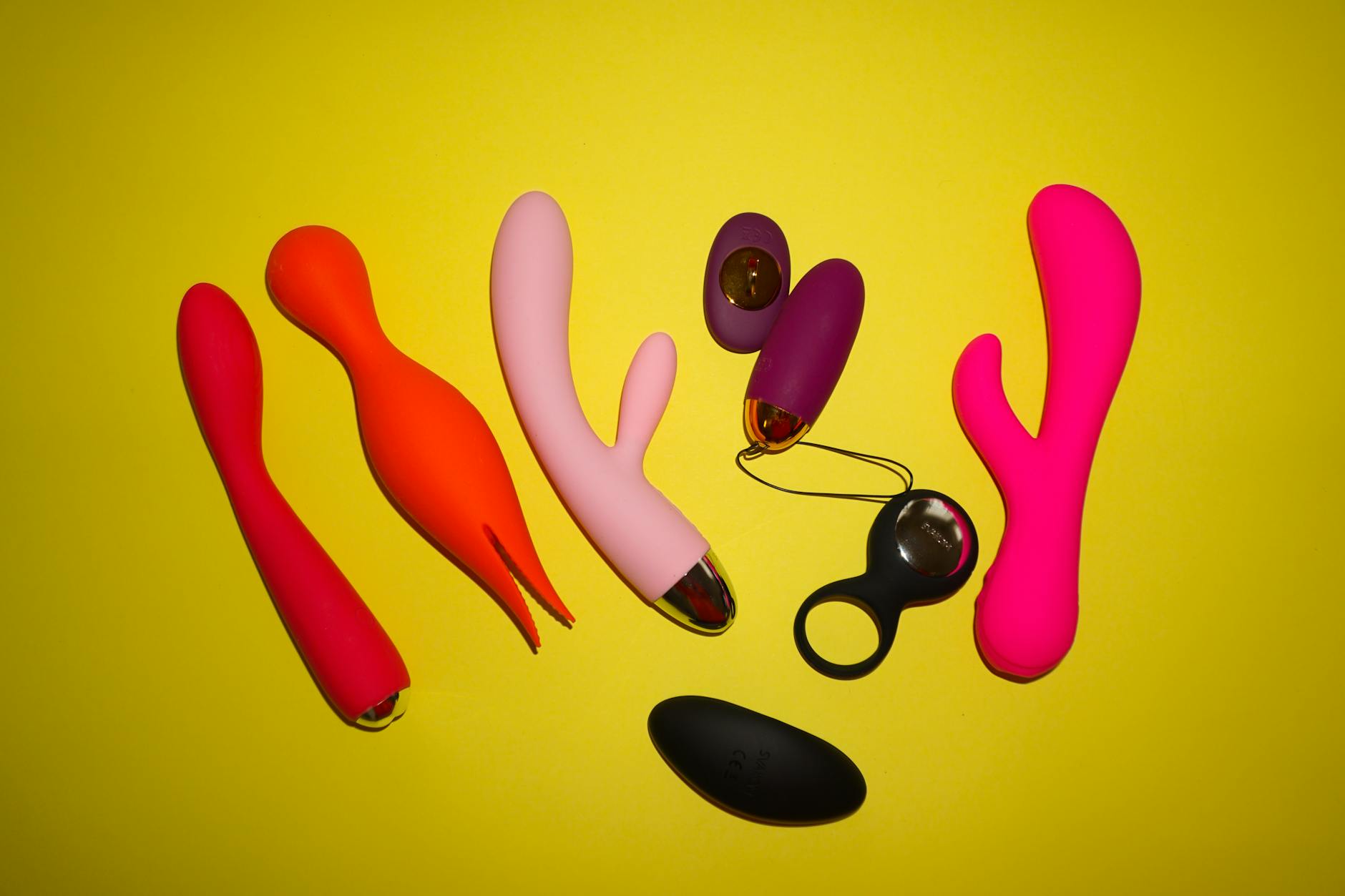
This is when lemon vibrators become genuinely useful.
Why? Because as your nervous system recovers, your clitoris has been offline. The neural pathways are still there, but they need activation. Gentle, consistent activation, without the pressure of having to perform or come quickly or be ready for your partner.
Suction-based clitoral stimulation (like the Lemon Clit Vibrator) is particularly helpful here because it doesn't require the same kind of mental focus that other stimulation does. You can turn it on, set it to a lower pattern, and just let your body remember what pleasure feels like.
Start at pattern 1 or 2. You're not chasing orgasm. You're reminding your nervous system that pleasure is possible. Some days nothing happens. Some days you get a warm, melty sensation that isn't quite arousal but is closer than you've felt in months.
Keep going. Your body will reconnect.
Rebuilding With a Partner (Or Not)
If you're in a relationship, this is worth a separate conversation.
Your partner needs to understand that this isn't about them. It's not about attraction or desire for them specifically. It's a nervous system issue that happens to be happening while you're together. That distinction matters because without it, partners internalize the lost arousal as rejection, which creates resentment, which is another stressor on your nervous system.
The conversation could sound like: "My nervous system is in overdrive from burnout. I'm not able to access arousal right now, and it's not about you or how I feel about you. Here's what I need to recover." Then actually tell them. Do you need them to initiate less? To give you space? To help with household stuff so you have more mental bandwidth?
If you want to rebuild pleasure together, you might explore lemon sexual toys with your partner, but on your timeline. Not as a fix for them, but as a gentle reconnection with your own body while they're present.
The key: no pressure. Zero. Your nervous system has been under pressure for months. It needs permission to come back to desire without another deadline.
FAQ: Rebuilding Desire After Burnout
How long does it take to rebuild arousal after burnout?
This varies wildly based on how deep the burnout goes and how seriously you take nervous system recovery. Mild cases can shift in 2-4 weeks if you're doing coherent breathing and movement daily. Deeper burnout might take 2-3 months of consistent parasympathetic work before arousal starts coming back. The timeline isn't linear, either. Some days you'll feel progress; some days you'll feel flat again. This is normal.
Can I rebuild arousal while still in the burnout situation?
Yes, but it's like trying to bail water out of a boat that's still sinking. You can do the nervous system work, use lemon vibrators, have those conversations with your partner. But if the actual source of burnout (the job, the situation, the pattern) doesn't change, your nervous system will keep pulling you back into crisis mode. At some point, something has to shift. That might mean a job change, reduced hours, therapy, or a major life restructuring. The personal work helps, but it can't override a fundamentally unsustainable situation.
Why does guilt make burnout arousal loss worse?
Guilt is another stressor. Your nervous system detects guilt as a threat (You're doing something wrong. You're failing. You need to fix this). That triggers more cortisol, which keeps you in sympathetic mode, which keeps arousal locked down. You end up in a loop: lost desire leads to guilt, guilt leads to stress, stress keeps desire locked down. The way out is radical self-compassion. Your desire didn't disappear because you're broken. It disappeared because your nervous system is protecting you. That's actually a feature, not a bug.
Does the type of vibrator matter when rebuilding arousal?
Somewhat. During recovery, you want stimulation that doesn't require a lot of focus or mental effort. Suction-based clitoral vibrators like lemon adult toys are particularly good because they do consistent work without you having to micro-manage pressure or angle. You turn it on and let it work. Other styles can work too, but they might require more active engagement when your nervous system is already depleted. Start simple.
What if my partner also has low desire from burnout?
This is actually common in long-term couples who've weathered a stressful period together. Both of you might have nervous systems stuck in crisis mode. The good news: the recovery work is the same. If you can both commit to breathing work, movement, and nervous system recovery, you might actually rebuild desire together. Sometimes that shared effort itself becomes a form of reconnection. Just don't put pressure on it. The goal is recovery, not more sex.
Should I see a doctor or therapist about burnout arousal loss?
Depends on what's underneath. If the burnout is situational (you're in a genuinely stressful situation right now), nervous system recovery work can help a lot. If it's deeper, if there's depression or anxiety underneath the burnout, therapy helps. If you want to rule out hormonal factors or medication side effects, a doctor visit is worth it. You don't need all three, but you might benefit from one. There's no shame in getting professional support.
Recovering arousal after burnout is possible. Your desire didn't disappear. Your nervous system just needed to survive. Once you help it come out of crisis mode, pleasure comes back. Be patient. Your body will remember.
What's Next
Building back arousal after burnout isn't just about sex. It's about reclaiming your nervous system, your permission to rest, and your right to feel good.
The lemon vibrators and toys are tools. But the real work is helping your body remember that it's safe enough to want things again.
If you're working through this and want guidance on how to navigate it, or you have questions about your specific situation, you can reach out at /contact. I'm here to help.