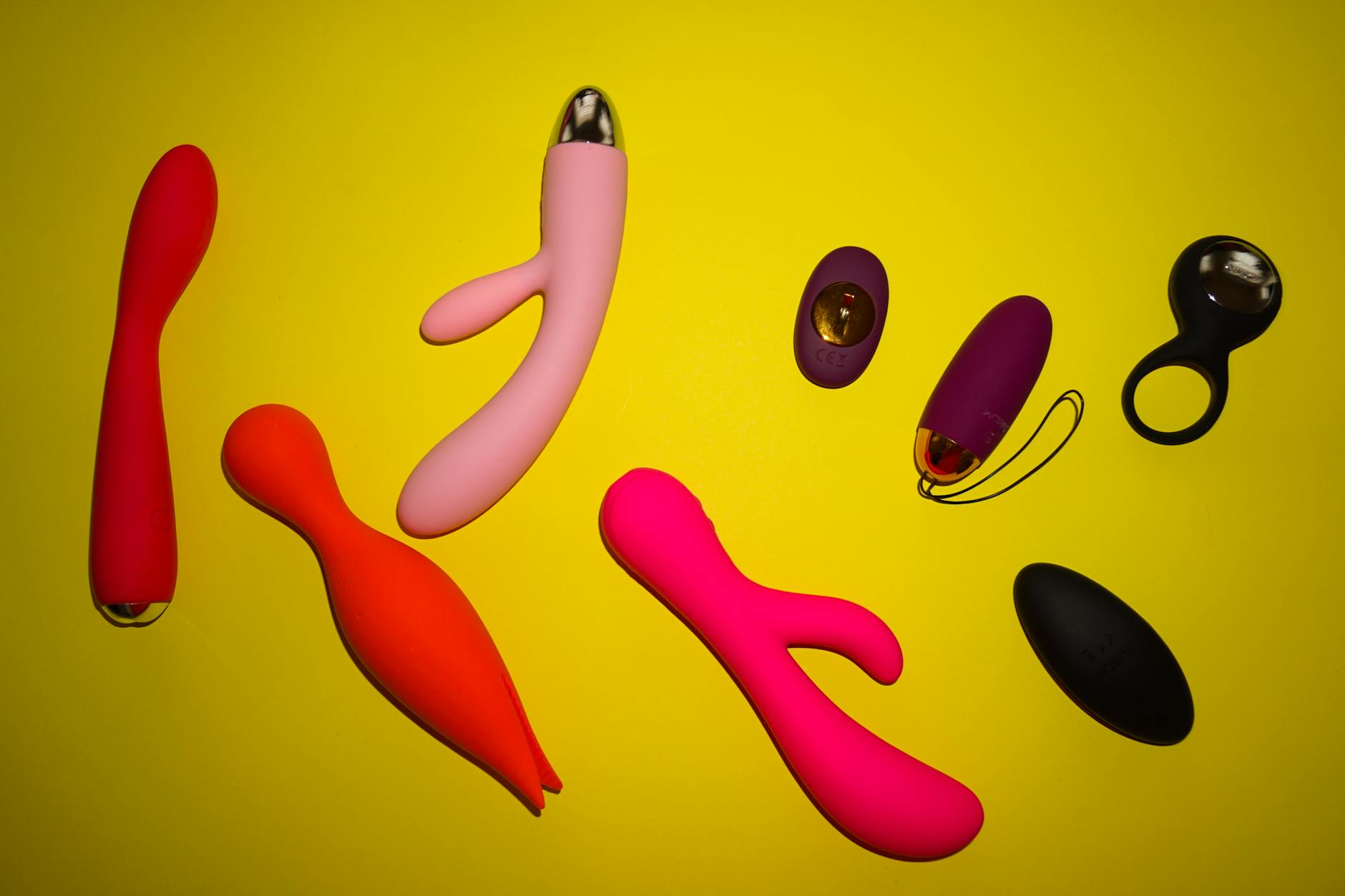
Here's the thing about how your clitoris actually works
Your clitoris has about 8,000 nerve endings packed into a structure smaller than a pea. That density means even tiny differences in how you touch it create wildly different sensations. Vibration and suction are not just two versions of the same thing. They are fundamentally different stimulation patterns, and your nervous system reads them completely differently.
Let me break down what's actually happening when you use a lemon clitoral vibrator versus a traditional vibrating toy, because this matters for understanding which one might work better for your body.
How vibration stimulates the clitoris
Vibration is pure mechanical oscillation. The device moves back and forth (or in circles) extremely fast, typically 80 to 12,000 oscillations per second depending on the toy. This rapid movement stimulates the nerve endings directly through contact and friction. It's consistent, it's predictable, and it tends to build sensation steadily.
With vibration, you're creating micro-movements across the surface of the clitoris. The stimulation is localized to wherever the vibrator is touching. Your nervous system registers this as rhythmic pressure, and that rhythm can eventually trigger an orgasm. Many people find vibration effective because the intensity is easy to control and the sensation builds gradually.
The downside? For some bodies, especially those with sensitive tissue or nerve pain, vibration can feel overwhelming or even painful. The rapid mechanical movement can irritate delicate skin over time. And for a small percentage of people, vibration just doesn't trigger arousal at all. Their clitoris responds to other types of touch.
How suction creates pleasure differently
Suction works through negative pressure. Instead of moving across the surface, it pulls gently inward, creating a vacuum seal. This stimulates not just the exposed clitoris but also the deeper clitoral structures inside the body. You have an internal clitoral bulb, a hood, and erectile tissue that swells during arousal. Suction reaches all of that.
Because suction involves the whole structure, it tends to feel less intense on the surface but deeper overall. Many people describe it as a rhythmic, pulsing sensation that builds very quickly. The sensation is often described as pressure and release, which mimics some aspects of how hands or partners might create pleasure. This is partly why suction-based toys like the Lem vibrator feel so different from traditional vibrators. You are not grinding or buzzing. You are gently drawing the tissue toward the toy.
Which one activates arousal faster
This varies wildly by individual, but there is a pattern. Suction tends to trigger orgasm faster for a significant percentage of people. Why? Because it engages the clitoris holistically and the sensation novelty is high. Your body hasn't been over-stimulated by that particular pattern. Many people who have used vibrating toys for years report that switching to suction feels revelatory.
Vibration is familiar. For some, that familiarity is comfort. For others, especially people with lower arousal sensitivity or hormonal changes from birth control or aging, vibration can feel dull because the nervous system has adapted to it.
Suction novelty works in your favor. It's a fundamentally different input, so your nervous system is fully alert. That alertness itself is part of what drives faster response. You're not settling into a familiar rhythm. You're processing something new.
The sensitivity difference matters
If your clitoris is sensitive to touch or you experience vulvodynia or any kind of nerve pain, suction is often gentler than vibration. The reason is that suction doesn't require you to accept the rapid mechanical movement over tender tissue. Instead, it pulls. The tissue comes toward the toy, rather than the toy repeating movement against the tissue. For many people with sensitive tissue, this distinction is everything.
People with endometriosis, history of trauma, or those experiencing pleasure changes after physical trauma often find suction more accessible because there is no friction component. The sensation is purely pressure based.
How hormone changes shift your preference
When estrogen drops, the tissue of the clitoris becomes thinner and more delicate. This is why vibration sometimes stops working after menopause or during hormonal birth control use. The rapid movement that felt perfect at 25 can feel painful at 55.
Suction is hormone-neutral. It doesn't depend on tissue thickness. In fact, some of my clients report that their most intense orgasms came after menopause using suction, precisely because the stimulation pattern wasn't dependent on having thick, resilient tissue. The deeper erectile structures still work. Suction reaches them.
If you are using birth control that affects arousal or moving through perimenopause, suction might be the bridge that keeps pleasure consistent as your hormones shift.
Combining the two for deeper pleasure
Here's what I tell people who are trying to decide: they are not either/or. Some of the most satisfying sessions happen when you layer them. Start with suction to wake up the tissue and the nervous system. Build arousal that way for 10 to 15 minutes. Then, once you are fully aroused and the tissue is engorged, add vibration for shorter bursts. You get the novelty benefit of suction plus the intensity escalation of vibration.
Or go the opposite direction. Vibration first for 5 minutes to trigger initial response, then switch to suction for the deep, pulsing sensation that often carries people over the finish line. Your preference will likely shift depending on your cycle, your stress level, your medication, and what your partner (if you have one) is doing.
Which toy delivers which sensation best
Traditional vibrators are built for vibration, obviously. They use a motor to create movement. Suction devices like the Lem vibrator are engineered specifically to create and sustain that vacuum sensation. You cannot get the same suction effect from a vibrator designed for vibration. The motor technology is completely different. A lemon clitoral vibrator uses gentle pulsing combined with the suction seal, which is why so many people experience breakthrough orgasms with these toys after years of traditional vibrators.
If you want to understand what type of stimulation actually works for your body, the only way is to try both. But go in knowing they are not the same thing, and knowing that "one doesn't work" does not mean your body is broken. It means that particular toy is not matched to your nervous system.
FAQ
Can you get addicted to suction and lose sensitivity to vibration?
Yes and no. Your nervous system can absolutely adapt to any repeated stimulus. That's called habituation. But it is reversible. If you only use suction for three months and then switch back to vibration, your sensitivity to vibration usually returns within a week or two. The key is variety. Use different toys, different patterns, different positions. Novelty prevents the nervous system from tuning out.
Why does suction feel more intense even though vibration is faster?
Intensity and speed are not the same. Vibration is faster, yes, but suction engages more tissue. The sensation is distributed across the clitoral bulb, the hood, and the visible clitoris all at once. That wider engagement is what feels more intense. Speed alone does not create intensity. Distribution does.
Is suction better for people with pelvic floor dysfunction?
Often, yes. Pelvic floor tension tends to reduce arousal because the muscles are clenching instead of relaxing. Vibration can actually trigger more tension because the rapid movement signals the nervous system to grip. Suction is gentler and can help the pelvic floor relax. That said, some bodies respond better to understanding the relationship between pelvic floor tension and arousal before choosing a toy. Start with education first.
If vibration hasn't worked for me, will suction?
Most likely, yes. Suction is a completely different input, so the fact that vibration didn't work does not predict anything about suction. That said, there are rare cases where clitoral sensitivity is so low that neither works well. In those cases, look at what is actually suppressing arousal. Is it medication, hormones, relationship stress, or something else? The toy is not the problem to solve. Something upstream is. Talk to a provider.
Can you use a suction toy internally?
Some suction toys are designed for internal use on the G-spot or fornix. The Lem vibrator is external only, designed for clitoral pleasure. That doesn't mean internal stimulation is off the table. It just means you would use a different tool for that. Clitoral suction is its own lane.
Why do some people swear by vibration if suction is so good?
Because bodies are different and pleasure is not hierarchical. Some people have clitorises that respond beautifully to vibration. Some find suction weird or uncomfortable. Some are ambiverted about it. There is no "better" toy. There is only the toy that matches your nervous system. And that can change over time.